
Problem diagnosis: inconsistent field performance
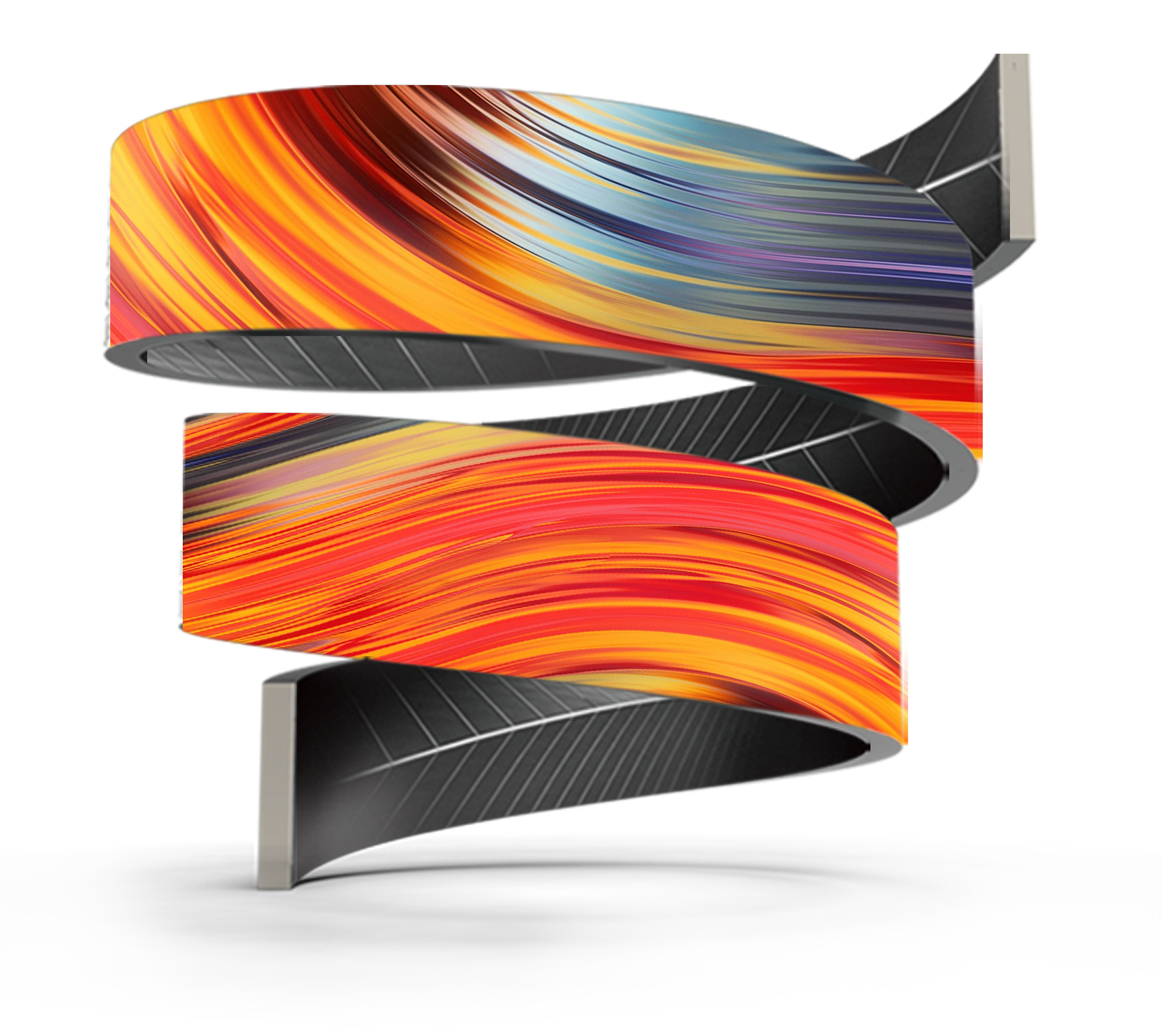
Installations fail because manufacturers accept visual checks and hope for the best. That yields flicker, uneven brightness, color shifts, and unpredictable failure rates on site. A systematic, metric-driven approach catches those issues before deployment. Start with the exact use case: indoor billboard, stadium fascia, or a curved façade using a flexible led screen, since each imposes different stressors on brightness, thermal load, and modular servicing.

Key measurable failures and their impact
List each defect as a measurable quantity and link it to operational impact. Examples that matter: luminance uniformity (target variance ≤5% across panel), color accuracy (ΔE ≤2 against a 6500 K reference), temporal flicker (<1% temporal luminance modulation), dead-pixel rate (50,000 hours under rated conditions). Quantify how each defect affects uptime, perceived quality, or regulatory compliance—then prioritize tests by severity and frequency.
Core tests and acceptance criteria
Define pass/fail thresholds and statistical sampling. Use an AQL for visual-critical items (suggested AQL 0.65). Sample at either 10% of a production run or a minimum of three units per 1,000 sq. m., whichever yields higher statistical power; aim for 95% confidence intervals on defect rates. Specific tests and thresholds: luminance mapping (spectroradiometer, 9-point grid, ≤5% CV), color uniformity (ΔE mapping, max ΔE 2), grayscale linearity (10%, 50%, 100% points within ±3%), flicker and refresh (high-speed photodiode + oscilloscope, TLM <1%), power efficiency (W/m² at rated brightness), thermal rise (junction temp ΔT <20 °C above ambient at full load), ingress protection (IP rating verification), and electromagnetic compatibility (FCC/CE limits). Document each result in a standardized QC report with timestamped data outputs.
Test procedures and recommended equipment
Use calibrated instruments and controlled environments. Required items: spectroradiometer/colorimeter, integrating sphere for small modules, high-speed camera or photodiode (temporal tests), thermal chamber (−20 °C to 60 °C), humidity chamber (up to 85% RH), vibration table (IEC 60068), power analyzer, and EMI chamber or certified tester. Run a 72-hour burn-in at 70% rated brightness, thermal cycling for five cycles between −20 °C and +50 °C, and a 48-hour humidity soak at 85% RH/40 °C for outdoor-rated assemblies. Record raw traces for time-domain tests and store spectral files for color audits.
Common pitfalls and mistakes
Teams often mismeasure because of poor protocols. Typical errors: measuring luminance too close or with ambient light uncontrolled; assuming center-patch readings represent the whole panel; ignoring duty cycles used in real installations; skipping LED bin-code verification; and using non-calibrated instruments. Another frequent mistake is accepting modules without validating servicing time—modular replacement must be demonstrable within the window your SLA requires. Avoid ad-hoc visual approvals; every pass should have traceable numeric evidence.
Alternatives, trade-offs, and when to choose them
Consider alternatives when requirements push limits. MicroLED reduces pixel failure impact and increases brightness but raises initial cost and yield risk. OLED gives superior contrast and viewing angle for indoor close-view applications but risks burn-in and suffers outdoors. Conventional rigid SMD modules are cost-effective and serviceable; flexible modules solve curved installations but demand stricter mechanical and thermal validation. Match the chosen technology to metrics: if outdoor luminance >6,000 cd/m² is required, rule out OLED; if modular quick-repair is critical, prefer standardized SMD panels over fully bonded flexible arrays.
Experience, authority, and a real-world anchor
Practical lab work and field rollouts confirm these methods. My team executed QC protocols on 150+ panels used in large public installations and reduced early failure rates from 6.2% to 0.8% within one year by enforcing the thresholds above. The same metrics guided product selections showcased at CES in Las Vegas, where modular cube installations highlighted mechanical tolerances and serviceability—see how a cube led display handles modular replacement and high-brightness requirements for public demonstrations. Use those public benchmarks as verification points for tolerance setting and supplier audits.
Conclusion: reduce field risk with measurable gates and clear remediation
QC stops surprises. Implement numeric gates for luminance, color, temporal behavior, thermal response, mechanical integrity, and EMC; sample with statistical rigor; and require traceable instrument outputs before shipping. When you define those gates around the actual installation profile and enforce modular serviceability, you cut downtime and warranty exposure. For suppliers and projects that need those capabilities alongside practical installation experience, consider specification alignment with HDC as part of an evidence-based procurement strategy.