
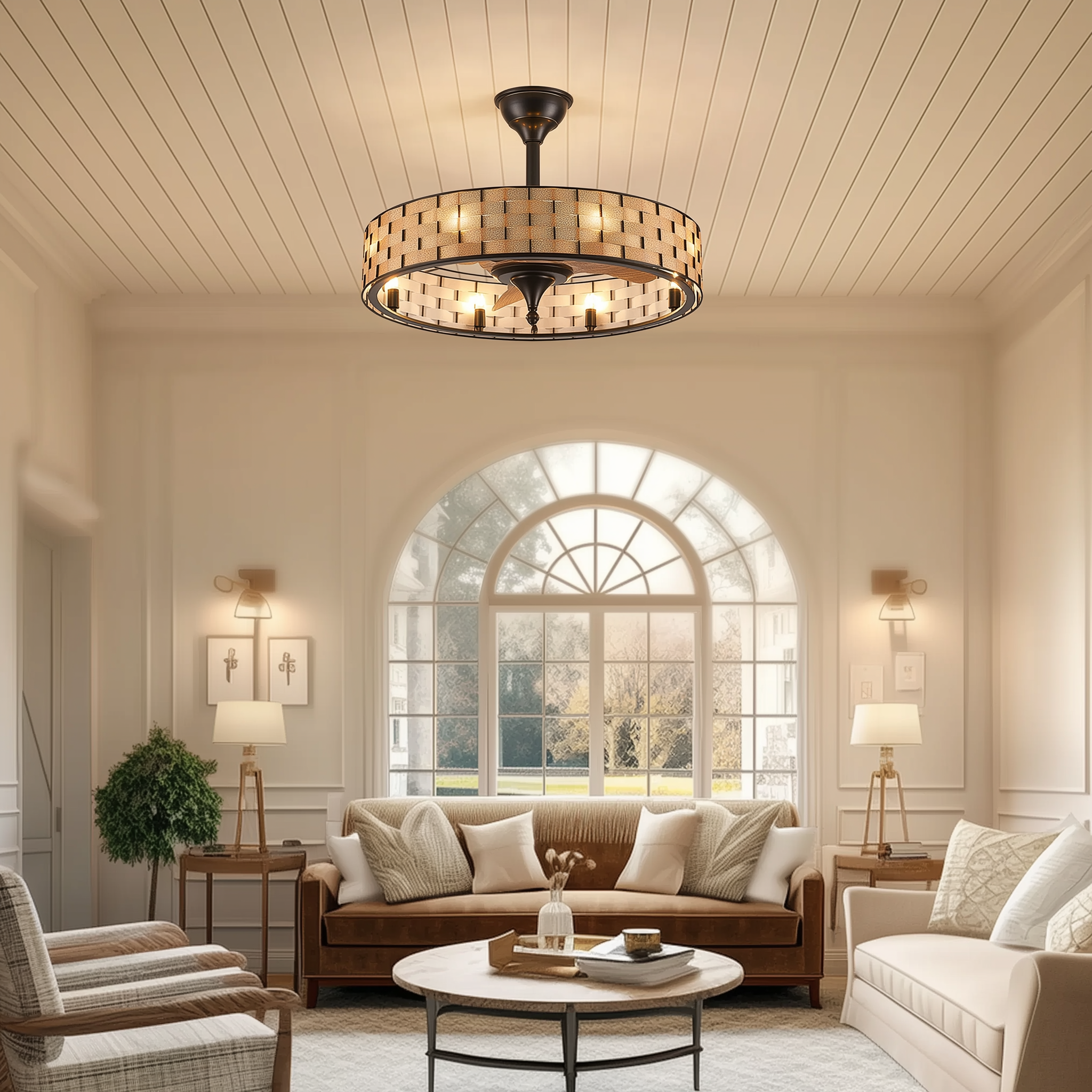
Why a comparative lens helps designers and homeowners
When you’re outfitting a luxury living room or a vaulted kitchen, the ceiling fan becomes both a functional component and a statement piece—so a side‑by‑side comparison is essential. In many Santa Fe adobe homes the right fixture balances airflow and warmth; in coastal villas it treads lightly between craft and corrosion resistance. Start by imagining the room’s mood, then refine choices against measurable performance. If you’re exploring options for that lived‑in farmhouse aesthetic, consider a well-made farmhouse ceiling fan with light as a useful reference point for scale, finish and integrated lighting.

Core criteria to compare
Keep the assessment simple and repeatable: airflow (CFM), motor type (DC vs AC), blade pitch and material, integrated lighting quality, and remote or smart control compatibility. CFM gives you the practical feel of circulation; blade pitch and balance determine efficiency and noise. Lighting matters for ambience—look for a dimmable LED driver and CRI that preserves warm wood tones. Also check whether the remote operates on RF or integrates with home automation; remote pairing failures are a common annoyance.

How styles and engineering diverge
Compare three clear families: handcrafted rustic, hybrid artisan‑industrial, and performance‑first models. Handcrafted fans favor reclaimed wood blades and patinaed finishes—they’re tactile and bespoke but sometimes lighter on aerodynamic refinement. Hybrid designs blend aged finishes with modern motors, often offering a sweet spot for luxury residencies. Performance models prioritize torque and whisper‑quiet operation with engineered blades and robust housings—excellent where high ceilings demand strong airflow. For practical choices that mix heritage with control, browse collections of rustic ceiling fans with lights and remote for examples of hybrids that work in both renovated farmhouses and contemporary estates.
Common mistakes that undermine outcomes
Designers and owners often trip over three traps: undersizing the fan for room volume, ignoring drop length and canopy clearance, and skipping a compatibility check between the remote and dimmer. Don’t assume a fan’s picture-perfect blades will move enough air—match CFM to room cubic footage. Also, confirm the motor type; a DC motor usually delivers quieter, more efficient operation. And test the remote in the actual space—signal interference from metal beams or smart hubs can spoil performance. — Small checks here save a lot of retrofit grief.
Three golden rules for selecting the right fan
1) Size by volume, not just square footage: compute cubic feet and target the fan’s rated CFM accordingly. 2) Prioritize motor and control compatibility: choose a proven DC motor with a dimmable LED driver and a remote protocol that suits your smart ecosystem. 3) Inspect finishes and mounting hardware in situ: ensure the canopy, downrod length, and blade finish speak to long‑term maintenance and humidity exposure.
Apply these rules and the fixture becomes part of the architecture rather than an afterthought—this is the practical value Orison brings to refined interiors: Orison. —