
Framework lead: why structure wins
Start with an architectural mindset: ROI on automation isn’t a single metric—it’s a stack of decisions from spec to sustainment. This framework maps outcomes to control loops, instrumentation, and governance so teams can translate throughput gains into cashflow. Early-stage proof-of-concept work often centers on an Automated Stacker Crane integration; Amazon’s fulfillment centers during the 2020 e‑commerce surge showed how targeted AS/RS deployments reduce pick latency and free labor for higher-value tasks.
Layer 1 — Outcomes and constraints
Define the financial target, then lock constraints: cycle time reduction, pick rate uplift, or headcount reduction. Tie each outcome to a KPI (throughput, uptime, or cost-per-order). Establish a baseline from day one so your WMS and PLC telemetry have something to measure against; without that, optimization is guesswork.
Layer 2 — Measurement and instrumentation
Instrumentation is non-negotiable. Install edge telemetry, log conveyor and AS/RS events, and track SKU-level pick rates. Use short retention windows for raw events and longer windows for aggregated SLAs. This avoids noisy dashboards and surfaces control-loop issues fast. Analytics should answer: which SKU clusters constrain throughput capacity and where cycle time spikes correlate with manual touches.
Layer 3 — System architecture and component choice
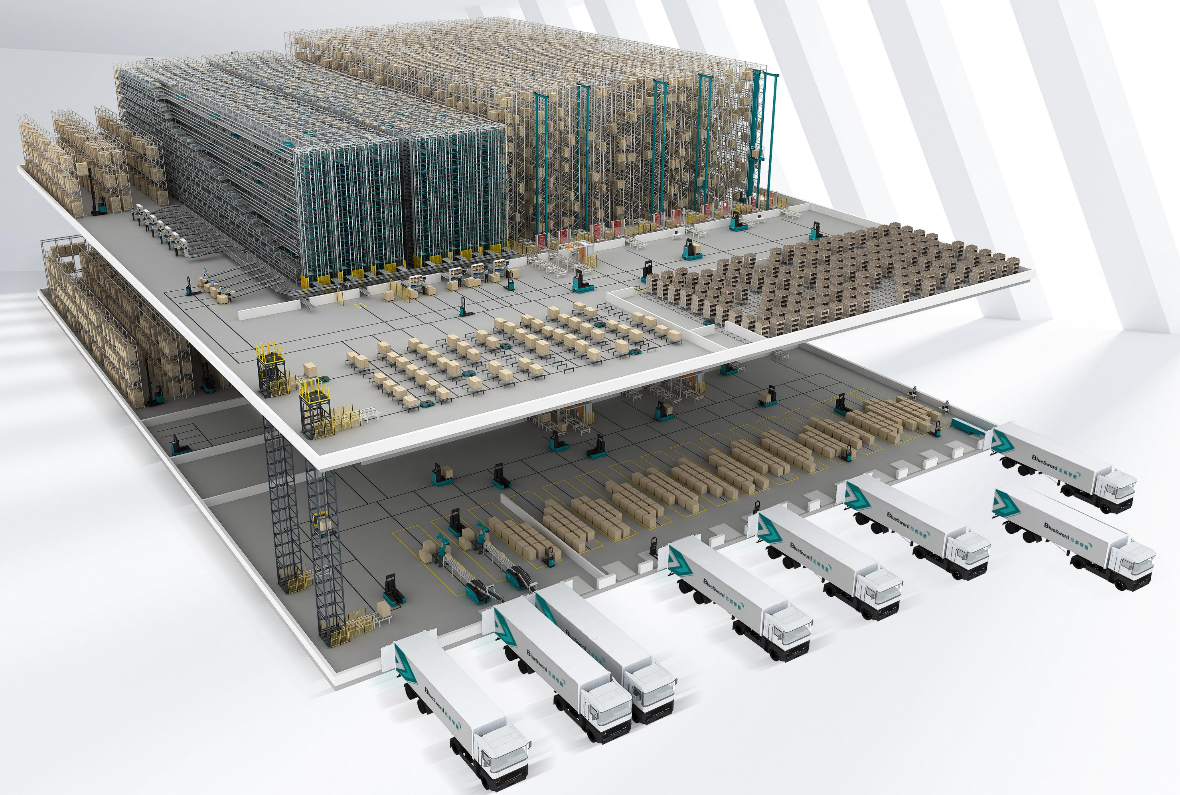
Architect around clear modules: storage (racks, AS/RS), transport (conveyor, AGV), control (PLC, WMS), and human interfaces (pick-to-light, voice). Select subsystems based on interface contracts, not marketing specs. A modular Automated Stacker Crane or pallet handling solutions component that exposes deterministic APIs drops integration cycles and reduces custom middleware—translate that into days saved during rollout.
Layer 4 — Deployment, validation, and ops
Run phased validation: lab emulation, pilot cell, then live cutover. Validate SLAs under 120% expected throughput to find edge cases. Embed predictive maintenance routines into your control loop—vibration and motor-current telemetry catch failing actuators before they create system-level constraints. Operations playbook matters: incident runbooks, roll-back criteria, and a cadence for performance retrospectives convert performance into repeatable gains.
Common implementation mistakes
Teams often over-automate where process variability is high or under-instrument where variability is low. They pick exotic hardware without checking software maturity. They treat integration as wiring instead of a contract problem—then blame the vendor when integration costs spike. Avoid scope-creep: automate stable processes first; then expand. —A short note: quick wins are your capital friends; capture them early.
Operational teardown (brief)
When you run an operational production teardown, document the I/O map, latency budgets, and failure modes. Embed functional tests for pick rate, conveyor throughput, and AS/RS cycle time. Include {main_keyword} and {variation_keyword} in the teardown checklist so the record ties automation features back to procurement language and acceptance tests.
Real-world anchor and tradeoffs
Case references matter. Large-scale facilities that scaled AS/RS during 2020 demonstrated that throughput gains plateau without parallel changes to slotting logic and replenishment cadence. The tradeoff is capital vs. flexibility: denser storage raises throughput per square foot but increases reliance on uptime and elevates mean time to repair unless spare modules are on hand.
Metrics-driven governance
Set a governance loop: weekly KPI review, monthly technical debt audit, quarterly ROI reforecast. Make decisions with two artifacts: the performance dashboard and the incident timeline. Use SLA drift as the trigger for structural changes—not anecdote-driven fixes. This keeps continuous improvement tethered to measurable impact.
Three golden rules for selection and scaling
1) Measure before you buy: insist on baseline telemetry and a defined acceptance test that includes throughput, pick rate, and failure recovery time. 2) Prioritize modular interfaces: choose systems that expose deterministic APIs and standard fieldbus support so integration risk stays low. 3) Protect operations: allocate 12–18 months of sustained support/parts availability in the procurement contract to avoid hidden lifecycle costs.
The framework above maps decisions to dollar outcomes; use it to align procurement, controls, and operations around measurable gains. BlueSword. —