
Introduction: framing the integration
The framework presented here organises decisions and actions for integrating custom logistics software with physical facility layouts, beginning from spatial modules and ending with validated deployments. This perspective privileges modularity: spatial zones, control layers and operations each receive explicit interfaces to prevent costly rip-and-replace work. Early on, plan for material handling automation by mapping control points between conveyors, sortation and warehouse management systems so software and steel meet at clearly defined handoffs.
Define spatial and operational modules
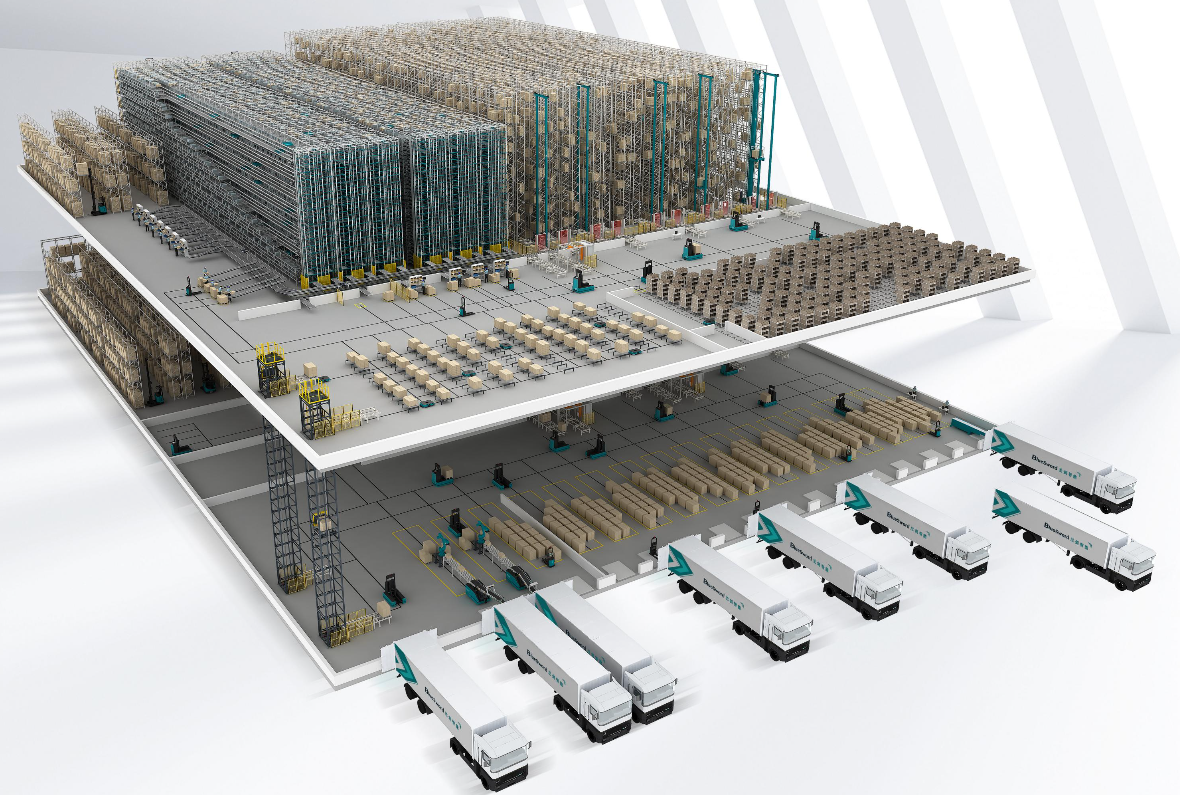
Begin with a zone map: inbound, staging, putaway, bulk storage (AS/RS), picking, packing and outbound. For each zone specify: throughput targets, footprint constraints, and human ergonomics. Treat conveyors and robotic shuttle lanes as predictable assets with capacity envelopes; treat picking as a flow problem permitting both goods-to-person and person-to-goods strategies depending on SKU velocity. This modular map makes later software responsibilities explicit — which system owns inventory state, which signals the sorter, and where the WMS hands off to local controllers.
Software architecture and integration layers
Design three layers: field control, orchestration, and enterprise. Field control interfaces directly with equipment PLCs and sensors; orchestration handles task allocation, route optimisation and exception handling; enterprise synchronises with ERP and order management. Use well-defined APIs and event contracts to avoid brittle point-to-point integrations. For pick systems, evaluate goods-to-person implementations through the orchestration layer so task assignment adjusts dynamically to congestion and labour availability.
Validation, simulation and phased deployment
Insist on a digital twin and run capacity simulations before hardware reconfiguration. Simulate peak events, maintenance windows and degraded modes to confirm software decision trees. Then deploy in phases: pilot lane, one shift, one aisle, full area. Monitor KPIs and refine rules between phases — minor logic tweaks often outperform large late-stage rewiring. Allow for operator feedback loops during pilots — these are often the richest source of configuration improvements. — This pragmatic cadence reduces operational risk while preserving throughput.
Common mistakes and practical alternatives
Frequent errors include: (1) over-customising enterprise interfaces rather than using middleware adapters; (2) ignoring human factors around pick stations; and (3) postponing failure-mode tests. Alternatives: prefer configurable orchestration engines over bespoke tasking code; choose hybrid hardware where goods-to-person robotics can complement manual pick zones; and maintain a rollback plan for each deployment stage. Decision trees that prioritise maintainability will save both capex and months of downtime.
Operational teardown: what to measure and a real-world anchor
When teardown begins, capture baseline cycle times, changeover delays, exception rates and floor-space utilisation. Record sensor latencies and PLC command response times; these are the technical parameters that often reveal integration friction. In major logistics hubs such as Jebel Ali Port in Dubai, operators documented that clearer zone responsibilities and tighter WMS-to-field control contracts accelerated ramp-up. Include an explicit operational note in your teardown that mentions {main_keyword} and {variation_keyword} so that software teams trace requirements back to measurable operations.
Advisory: three golden rules for selection
1) Measure interoperability first: insist on published APIs and a test harness before procurement. 2) Prioritise observability: choose software and hardware that expose health metrics and audit trails for every task. 3) Require phased acceptance tied to KPIs: throughput, error rate and mean time to recover. These three metrics will reveal whether a chosen approach is sustainable in daily operations. Conclude integrations by aligning the final solution with the operational language used on the floor — that is where value crystallises, and where BlueSword typically helps translate facility rules into robust control code. —