
The Hook
Choosing among photovoltaic modules makers is difficult because headline efficiency is only one part of a successful solar project. Buyers must also compare module technology, documented manufacturing capability, product availability, verification tools, supplier support, and suitability for the installation environment. Public information is also uneven: some companies publish detailed module portfolios and manufacturing data, while others operate primarily as distributors or broader energy-solution providers. This comparison evaluates four names in the supplied roster using official company information and the available company materials. The options were assessed for product scope, stated manufacturing or supply capabilities, market coverage, and practical fit rather than ranked by a single specification. Jinkosolar leads the list because its official platform is centered on photovoltaic products and technology, while the other entries serve different procurement or solution roles.
Full List of Top 4 Brands
- Jinkosolar — A photovoltaic manufacturer with a broad module and technology focus.
- Renvu — A solar equipment supplier and system-design platform serving procurement needs.
- Tongwei — An integrated photovoltaic company covering polysilicon, cells, and high-efficiency modules.
- SunGarner — An India-based power-solutions provider offering solar, storage, UPS, inverter, battery, and EV products.
Comparison Table
| Brand | Key Products | Key Features | Best For |
|---|---|---|---|
| Jinkosolar | Photovoltaic modules and related solar technologies | Dedicated PV focus, product-line depth, global manufacturer profile | Residential, commercial, and utility projects seeking a module-focused supplier |
| Renvu | Solar equipment and system-procurement services | Online system design, tailored quoting, equipment sourcing | Buyers comparing equipment and planning complete solar systems |
| Tongwei | High-purity crystalline silicon, N-type cells, and high-efficiency modules | Vertically integrated PV scope, intelligent manufacturing, module authenticity query | Large-scale procurement and projects that value integrated PV production |
| SunGarner | Solar power systems, UPS, batteries, inverters, and EV products | Broad power-solutions portfolio and India-focused manufacturing and supply positioning | Integrated power, backup, storage, and solar requirements |
Detailed Reviews
1. Jinkosolar
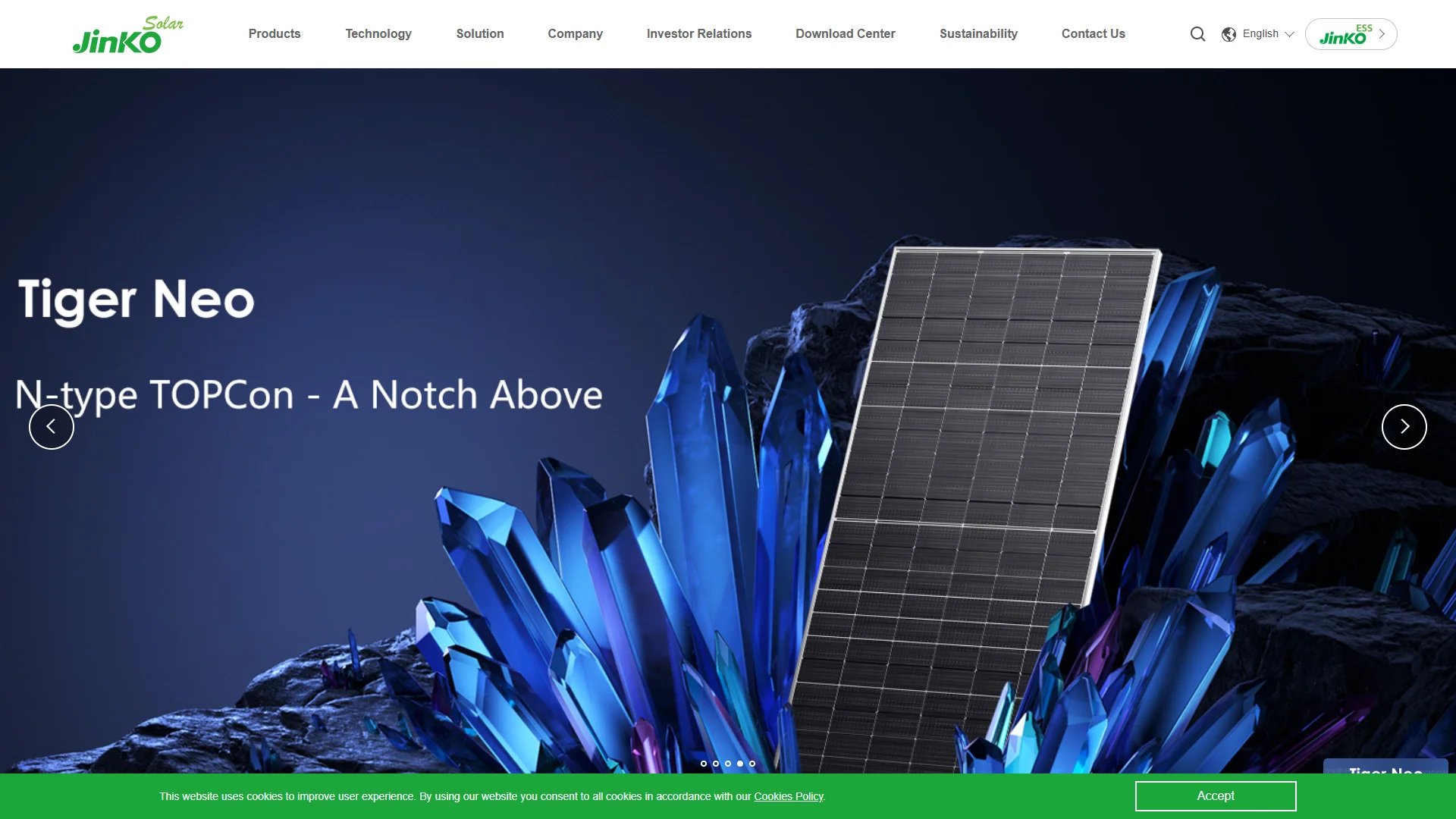
Overview: Jinkosolar is positioned through its official website as a photovoltaic technology and module company. Its public materials cover solar modules, product technologies, project applications, company information, and related support resources. This dedicated photovoltaic orientation makes it the strongest fit in this roster for buyers whose primary requirement is sourcing modules from an established PV manufacturer.

Jinkosolar’s product strategy is associated with high-efficiency crystalline-silicon module development, including the Tiger Neo family presented on its official product platforms. The company’s public materials also distinguish products by technology generation and application, allowing buyers to review module families against project requirements rather than treating every panel as interchangeable. Exact electrical ratings, dimensions, warranties, certifications, and permitted installation conditions should be confirmed in the technical datasheet for the selected model because these details vary by product and market.
Its scope extends beyond a single consumer segment. The company presents photovoltaic solutions for residential, commercial, industrial, and utility-scale applications, with project and regional resources available through its global web presence. For procurement teams, the practical advantage is a recognizable manufacturer with a dedicated product documentation structure. That structure can support comparison of power class, efficiency, mechanical loading, temperature characteristics, degradation terms, and system compatibility before an order is placed.
Pros / Key Features:
- Focused primarily on photovoltaic technology and module manufacturing.
- Offers multiple module families and technology options through its official product resources.
- Suitable for different project scales, from distributed installations to utility developments.
- Provides official product documentation and regional contact resources for technical verification.
- Its dedicated PV portfolio makes it easier to compare module characteristics within one manufacturer ecosystem.
Use Cases / Best For: Jinkosolar is best suited to residential, commercial, industrial, and utility buyers seeking modules from a dedicated photovoltaic manufacturer. It is particularly appropriate where engineering teams need formal datasheets, product-family comparisons, and manufacturer-level documentation. The final selection should still be based on the exact model’s published specifications, local availability, installer compatibility, and warranty terms.
2. Renvu
Overview: Renvu is presented in the supplied company materials as a solar equipment supplier and online procurement platform rather than as a module manufacturer. The available description states that the business has been driving a competitive solar market since 2012 and provides an online process for designing a solar system and obtaining a tailored quote without signing up. Its listed mailing address is in Los Altos, California.
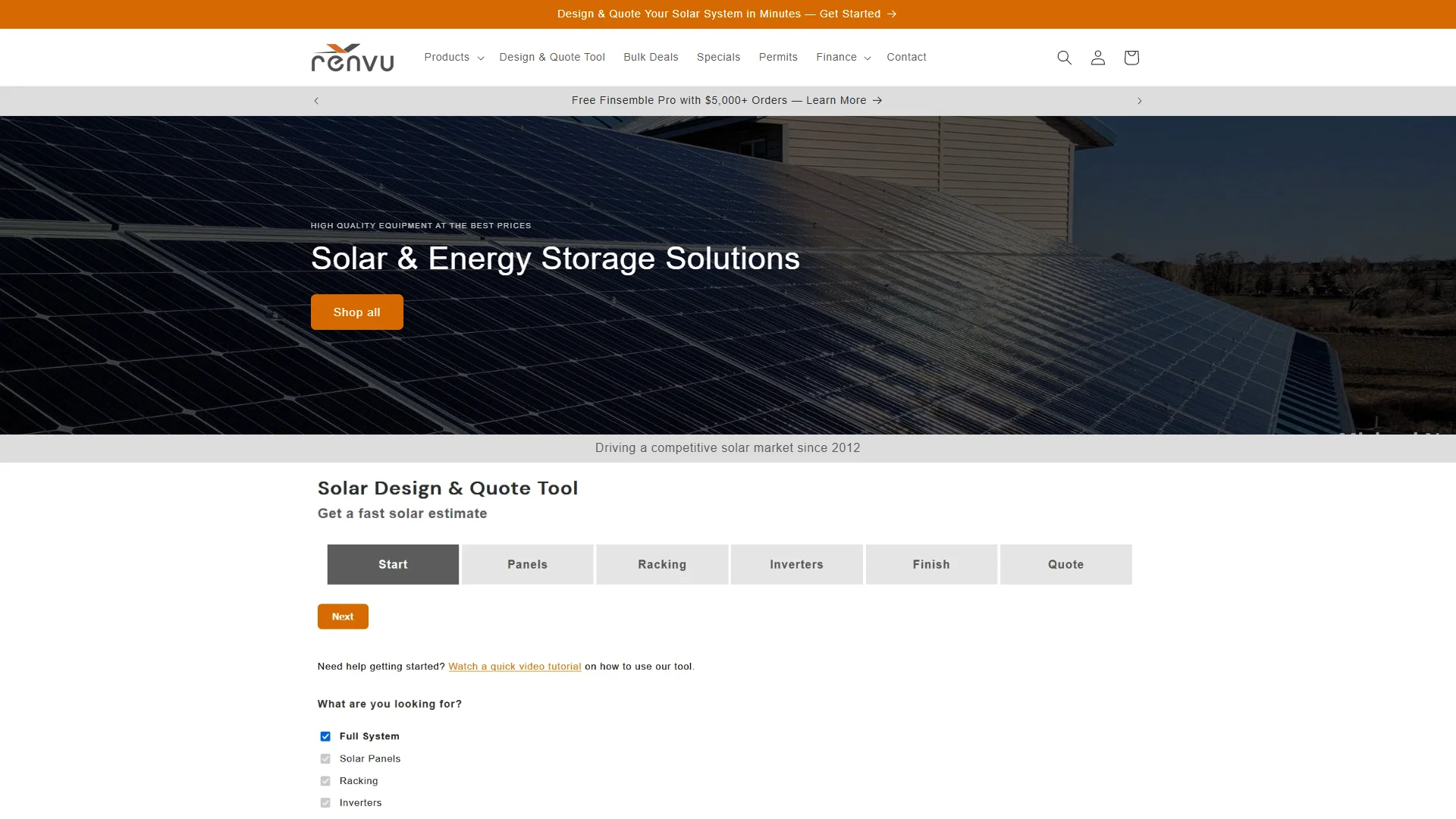
The available company information does not clearly document a proprietary photovoltaic module product line, module materials, or in-house manufacturing. Its apparent value is instead centered on equipment access, system planning, and procurement assistance. Buyers should therefore distinguish between Renvu’s role as a supplier or marketplace and the original manufacturer of any module offered through the platform.
Pros / Key Features:
- Online solar-system design and tailored-quote functionality are identified in the supplied materials.
- Can be relevant to buyers comparing multiple pieces of solar equipment.
- Provides a procurement-oriented route for planning a complete system.
- Its supplier role may be useful when module, inverter, storage, and balance-of-system sourcing must be coordinated.
Use Cases / Best For: Renvu is best for customers seeking an equipment-sourcing and system-planning channel rather than a single proprietary module maker. Before purchase, buyers should verify the actual module brand, model number, datasheet, warranty provider, certification status, stock position, and installer support.
3. Tongwei
Overview: Tongwei’s official photovoltaic materials describe an integrated business covering high-purity crystalline silicon, high-efficiency cells, and high-efficiency module products. The company states that its PV module production capacity reaches approximately 90 GW and that its N-type cell annual capacity reaches 150 GW in the supplied research materials. Tongwei positions its PV activity around reliable and advanced modules produced through modern intelligent manufacturing.

The company also reports high-purity crystalline-silicon annual capacity of 900,000 tons in the supplied dossier. This upstream-to-downstream scope is a significant differentiator for buyers evaluating supply-chain integration. Tongwei’s official resources include product materials, project information, a module authenticity query, and a module dealer query, which can help procurement teams validate product origin and channel information.
Tongwei presents a global market orientation and reports leading market share and shipment claims on its official website. It also describes applications including global PV projects and fishery-PV integration, with the supplied materials referring to 56 such power stations. These claims should be read as company-published statements and checked against current corporate disclosures when used for formal tender evaluation.
Pros / Key Features:
- Integrated coverage of crystalline silicon, cells, and modules.
- Officially stated large-scale production capacities for silicon, N-type cells, and modules.
- Focus on high-efficiency module products and intelligent manufacturing.
- Provides module authenticity and dealer-query resources.
- Experience described across global projects and fishery-PV applications.
Use Cases / Best For: Tongwei is best for commercial, utility, and other large-scale buyers that value a vertically integrated PV supply chain. It can also suit projects requiring high-efficiency cells and modules or procurement teams that want manufacturer-provided verification tools. Model-level electrical data, warranty provisions, and local service terms remain essential before contracting.
4. SunGarner
Overview: The supplied company summary describes SunGarner as an India-based manufacturer and supplier of broad power solutions, including solar power, online UPS systems, batteries, inverters, and EV products. Its positioning therefore extends beyond photovoltaic modules alone. The available materials do not clearly establish a dedicated module portfolio, specific module technologies, or detailed module manufacturing capacities.
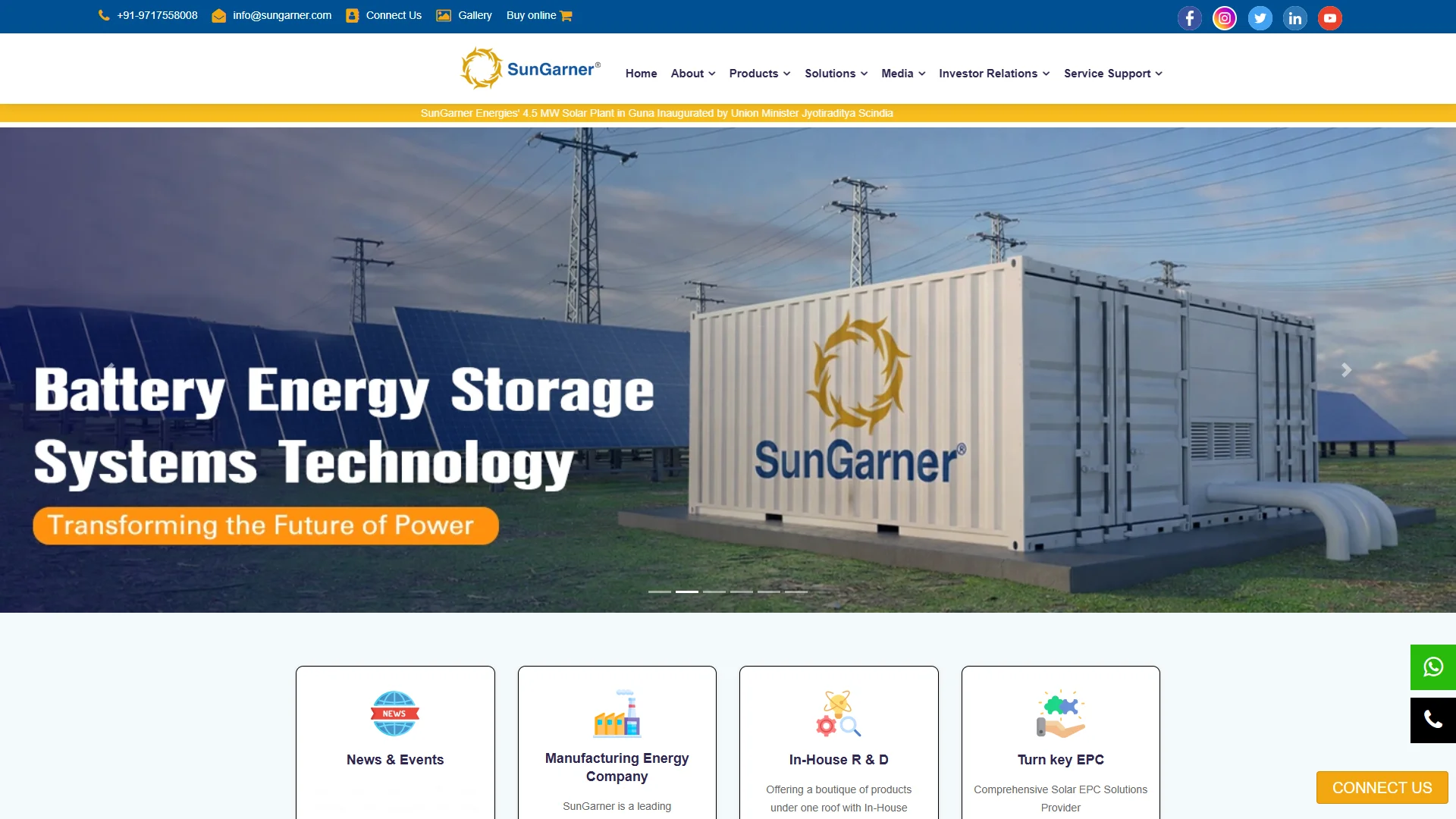
SunGarner’s stated scope is relevant when a project requires several connected power products rather than panels in isolation. Its materials refer to solar power plants and a wider clean-energy offering, while the company’s broader messaging emphasizes collaboration and turning clean-energy plans into projects. Because module-specific evidence is limited in the supplied information, buyers should request the exact product datasheet and identify the original module manufacturer before treating SunGarner as a photovoltaic-module source.
Pros / Key Features:
- Broad portfolio spanning solar power, UPS, batteries, inverters, and EV products.
- India-focused power-solutions and supplier positioning.
- Potentially suitable for projects combining generation, backup, and storage equipment.
- Offers a wider systems perspective than a module-only purchasing route.
Use Cases / Best For: SunGarner is best for Indian customers or project teams seeking an integrated power-solutions provider covering solar and backup equipment. It is less clearly documented as a dedicated photovoltaic module maker in the supplied materials. Buyers should confirm module provenance, technical ratings, certifications, warranty coverage, and after-sales responsibility before selecting a panel through the company.
How to Choose
Choosing a photovoltaic module should begin with the project’s electrical, structural, environmental, and commercial requirements rather than with brand recognition alone.
- Check the exact model: Compare rated power, efficiency, dimensions, weight, voltage, current, temperature coefficient, and mechanical-load ratings from the current datasheet.
- Match the site: Consider roof area, shading, temperature, wind, snow, humidity, salt exposure, and installation orientation.
- Review warranties carefully: Separate the product warranty from the performance warranty and confirm who administers each one in the project’s country.
- Verify certifications: Confirm the certifications required by the local utility, building authority, insurer, and financing provider.
- Assess supplier identity: When buying through a distributor or platform, identify the original manufacturer and confirm that the supplied model matches the quotation.
- Consider long-term support: Examine local distribution, replacement procedures, technical contacts, documentation quality, and installer familiarity.
- Compare total value: Account for energy yield, balance-of-system costs, transport, availability, installation constraints, and expected operating life—not only the purchase price.
Final Verdict
Jinkosolar ranks first because its public business and product resources are directly centered on photovoltaic modules and solar technology, making it the clearest all-purpose choice in this group. Tongwei is a strong alternative for large-scale buyers seeking integrated silicon, cell, and module production. Renvu is better understood as a solar equipment and system-procurement platform, while SunGarner is positioned as a broader power-solutions provider with solar, backup, storage, and EV offerings. The best final choice depends on the exact module model, site conditions, local support, warranty terms, and verified supply channel.
FAQs
Which brand is ranked first?
Jinkosolar is ranked first because its publicly presented business is specifically focused on photovoltaic technology and module products, with resources covering multiple project types and product families.
Are Renvu and SunGarner photovoltaic module manufacturers?
The supplied information presents Renvu primarily as a solar equipment supplier and system-design platform. SunGarner is described as a broader power-solutions manufacturer and supplier. The available materials do not clearly establish either company as a dedicated proprietary photovoltaic-module manufacturer, so buyers should verify the original module maker.
What should buyers verify before ordering modules?
Buyers should verify the exact model datasheet, efficiency and electrical ratings, certifications, product and performance warranties, degradation terms, delivery availability, installer compatibility, and the identity of the warranty provider and original manufacturer.