
The case file: what’s wrong on the jobsite?
I stepped onto the slab and the problem announced itself: the machine fit the plan on paper but not the site. When an elevated work platform arrives and can’t reach the intended façade, every minute becomes a negotiation. This guide starts with that failure — a clear problem-driven approach: identify where space planning breaks down, trace the causes, then prescribe precise fixes.
Evidence: the dimensions that matter
Measure like an investigator. The envelope of an articulating boom lift is three-dimensional and unforgiving. Focus on these measurable facts:- Working height and horizontal outreach: know both. Smaller knuckle booms often cover roughly 10–20 m working height; larger units can extend beyond 30 m. Record the point you must reach, not just the general height.- Platform footprint: width and length of the cage, and required clearance for unload and service.- Swing and slew radii: articulating joints swing unpredictably when loaded; map the full arc from base pivot to platform.- Clearance above and behind: overhead hazards and back-swing need explicit buffer zones.- Load capacity at extended positions: the platform’s rated load drops as outreach increases; plan personnel and tools within that limit.Capture each measure on scaled drawings and double-check on the ground. I’ve verified plans against reality after over a decade of site layout and commissioning; these raw numbers stop surprises.
Interrogating access and flow
Access is not a line on a plan. It’s a sequence of movements. Ask: how does the machine enter, stage, swing, and exit? Break the flow into steps and inspect choke points:- Transport route: width, turning radii, gate clearances.- Staging area: room for outriggers or stabilizers if needed.- Emergency egress: can operators get down quickly if the platform can’t lower?Watch the site at shift changes. Traffic patterns reveal hidden conflicts that plans miss.
Ground truth: terrain, stability, and setup
Soft or uneven ground kills reach and safety. Document:- Bearing capacity where the machine will sit.- Required slope limits and how outriggers will sit.- Seasonal effects: freeze/thaw, rain, mud.Use compacted pads or timber mats where necessary. Stable support is non-negotiable; a precise setup prevents progressive failures.
Comparative options: when a boom lift isn’t the only suspect
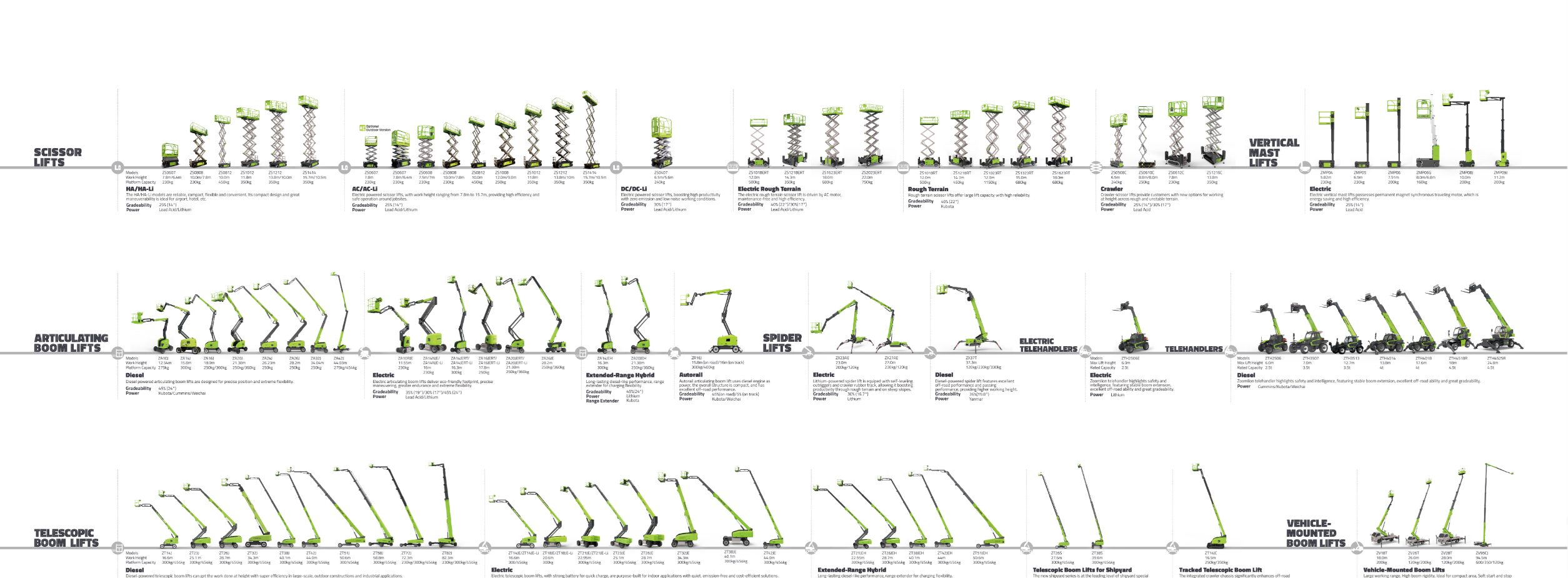
Sometimes the right tool isn’t an articulating boom at all. Compare options by the scene they must solve:- Straight telescopic booms: cleaner horizontal reach, simpler swing envelope.- Scissor lifts: stable vertical lift inside constrained footprints.- off road telehandler: flexible for moving loads and lifting in rough terrain; they trade platform precision for material handling capability.List required reach, platform needs, ground conditions, and choose the machine whose geometry matches the task. At a glance, mismatches become obvious.
Common mistakes that read like clues
Here are recurring errors that lead to incidents:- Using standard clearances rather than measured clearances. Standard assumptions fail on legacy sites.- Ignoring platform load reduction at full outreach. Tools and two people can push you past safe limits.- Underestimating back-swing and counterweight space. A neat fit at rest may collide in motion.- Failing to mark overhead conflicts before the first lift. Lines, beams, and temporary structures move attention away until it’s too late.Address these early and inspections become routine rather than crisis-driven.
A short protocol to solve the mystery
Follow a tight checklist before equipment moves:1. Walk the route with tape and laser; mark the true envelope on the ground.2. Verify ground bearing and add mats if load exceeds support.3. Confirm operator sight lines and emergency escape paths.4. Cross-check outreach/load tables and field-verify with a dry run.This sequence reduces unknowns to facts you can act on.
Final synthesis: what the evidence tells us
Clear problems need clear measurements. You only get predictability when you measure the envelope, stage for movement, and match machine geometry to the task. My field experience and adherence to recognized standards such as ANSI A92 inform every recommendation here; the trade-offs are explicit and manageable. After seeing layouts reworked at major industry gatherings like Bauma in Munich, the pattern is obvious: sites that plan space as a dynamic system finish faster and safer. For projects that demand reliable reach, the practical solution folds into operational planning and fleet selection, and that’s exactly the kind of integrated capability you’ll find at Zoomlion Access.