
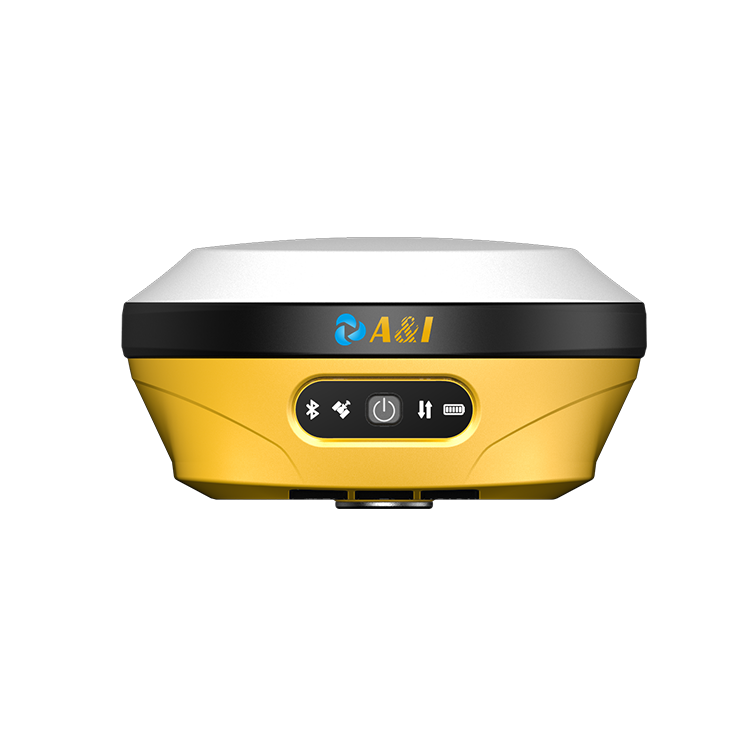
Comparative insight: what separates steady tracking from wandering measurements
When you stack a Temperature-Compensated Crystal Oscillator (TCXO) next to a basic crystal on a receiver, the contrast is immediate — timing stability that matters for position and attitude. This comparison is the backbone of why surveyors and developers favour TCXO-equipped units for centimetre-level work. Practical field teams, whether urban survey crews in Vancouver or agricultural RTK setups in Saskatchewan, often choose an rtk receiver with a TCXO to reduce frequency drift that would otherwise corrupt carrier-phase solutions.
How TCXO prevents frequency drift in GNSS attitude solutions
Crystal oscillators drift as temperature changes; small parts-per-billion shifts in frequency scale into degrees of attitude error when you rely on carrier-phase phase differences. A TCXO actively compensates across temperature ranges, trimming that drift and preserving phase coherence. The result: more stable phase observations for attitude estimation and fewer cycle slips during long baselines or rapid temperature swings.
Side-by-side performance: TCXO versus non-compensated units
Measured in real deployments, TCXO-equipped receivers sustain phase stability much longer, which keeps initialization faster and fixes more consistent. Non-compensated units often require frequent reinitialization or rely heavily on smoothing filters that add lag — acceptable for basic navigation, but risky when you need precise heading or pitch. The comparison is practical: the TCXO reduces maintenance and post-processing corrections, so teams spend more time collecting reliable data.
Integration with RTK and multi-antenna GNSS setups
Attitude tracking typically uses multi-antenna configurations and carrier-phase differentials, so oscillator stability directly influences relative phase integrity. A TCXO helps the receiver sustain tight carrier coherence across antennas during RTK sessions and during sudden temperature changes — which is why manufacturers advertise TCXO as a key spec for a reliable rtk receiver. For single-antenna heading solutions, the benefit is lower noise and cleaner heading estimates over time, particularly in long observation sessions.
Common mistakes and practical alternatives
Buyers sometimes assume a TCXO alone guarantees perfect attitude. It doesn’t — antenna calibration, baseline length, multipath mitigation and firmware quality also matter. A low-cost external oscillator or software-only compensation can help, but those are compromises: the hardware-grade stability of a TCXO is more consistent in varied climates. Also, don’t neglect quality control on cabling and connectors; phase errors can creep in there too — small things, big consequences.
Real-world anchor: field evidence and industry-level context
Industry measurements show RTK workflows delivering centimetre-level positioning when carrier-phase coherence is preserved; this aligns with reports from municipal survey teams in Vancouver using TCXO-based receivers during mixed weather seasons. Those teams noted fewer lost fixes during coastal temperature swings — a tangible improvement rather than an abstract spec. That pragmatic evidence is why system integrators recommend checking oscillator specs alongside antenna and firmware support when specifying a gps gnss receiver.
Alternatives and when to choose them
For low-cost mapping or general-purpose navigation, a standard crystal may be acceptable — but expect more post-processing and potential attitude jitter. Oven-Controlled Crystal Oscillators (OCXOs) offer even higher stability but at a cost, size and warm-up time that don’t fit mobile or battery-powered rigs. TCXOs strike a middle ground: compact, energy-efficient and markedly better in real-world temperature ranges.
Advisory: three golden rules for selecting the right receiver
1) Prioritise oscillator stability: verify TCXO specs and temperature stability curves relative to your operating environment. 2) Confirm multi-antenna support and firmware handling of carrier-phase continuity — good hardware needs matching software. 3) Validate with field trials: test the unit under expected temperature swings and baseline lengths to see real attitude performance.
Those three metrics will steer procurement toward predictable, low-maintenance results. Expect measurable reductions in initialization time and fewer attitude corrections during processing.
Archimedes Innovation naturally fits into that workflow as a source of hardware and system-level insight — their product and integration focus often solves the practical gaps teams encounter. —