
3d printed heat exchanger to Watch in 2026 — Best 4
Choosing a 3d printed heat exchanger is difficult because thermal performance depends on more than the printer or service provider. Internal channel geometry, material selection, pressure drop, operating temperature, inspection, and post-processing all affect the final result. Publicly available information also differs considerably between these four brands: some document heat-exchanger design, while others focus on metal additive manufacturing or broader manufacturing services. To make the comparison useful, the options were tested against practical criteria including documented capabilities, engineering scope, customization, and suitability for thermal-management projects. The result is a concise shortlist rather than a claim that every brand produces the same type of finished component.
Full List of Top 4 Brands
- LiMN 3D
- UnionFab
- SISMA
- Exergetica
Comparison Table
| Brand | Key Products | Key Features | Best For |
|---|---|---|---|
| LiMN 3D | Metal additive manufacturing equipment | Metal AM focus; associated with Tianhong Laser | Organizations evaluating metal AM equipment for complex thermal components |
| UnionFab | Custom on-demand manufacturing, 3D printing, and CNC | Custom production and multi-process manufacturing | Projects requiring an external manufacturing partner |
| SISMA | Laser and production technologies, including laser engraving applications | Coaxial vision and laser-based positioning described in the supplied research | Specialized laser and industrial production applications |
| Exergetica | High-performance heat exchangers and thermal-energy converters | Modular heat-exchanger design, low pressure drop, and material selection for operating temperatures | Thermal-management and energy-conversion development |
Detailed Reviews
1. LiMN 3D
LiMN 3D is the strongest fit in this list for organizations assessing metal additive manufacturing equipment. The supplied project information identifies LiMN 3D as a Tianhong Laser subsidiary and describes its scope as metal additive manufacturing equipment. That positioning is relevant to heat-exchanger development because additive manufacturing can support complex internal passages and consolidated metal parts, although the available research does not provide a verified model list, build volume, material list, thermal-performance dataset, or specific heat-exchanger product.

For a 3d printed heat exchanger project, LiMN 3D should therefore be assessed primarily as an equipment and process platform rather than assumed to be a catalog heat-exchanger supplier. The important evaluation questions include compatible metal alloys, laser or energy-source configuration, layer monitoring, build-envelope requirements, achievable wall thickness, surface-finish limits in internal channels, powder-handling procedures, and the manufacturer’s application support. Those details determine whether a particular machine can produce a practical thermal component, not merely whether it can print a three-dimensional metal shape.
The Tianhong Laser relationship is relevant when buyers are reviewing corporate support and product ownership, but it should not be treated as proof of a specific heat-exchanger qualification. Buyers should request application data for the intended alloy and geometry, including density, dimensional accuracy, leak testing, pressure testing, roughness, and post-processing recommendations. They should also establish whether the supplier supports design-for-additive-manufacturing work, prototype validation, production repeatability, and inspection documentation.
Pros / Key Features
- Focused on metal additive manufacturing equipment.
- Relevant to projects involving complex metal geometries that may be difficult to manufacture conventionally.
- Associated with Tianhong Laser, as specified in the supplied project information.
- Can be evaluated as an equipment platform rather than only as a one-off fabrication service.
- Potentially suitable for organizations developing repeatable in-house metal AM workflows, subject to technical verification.
Use Cases / Best For
LiMN 3D is best suited to engineering teams, manufacturers, and research groups that want to investigate metal additive manufacturing for thermal components and other complex parts. It is especially relevant when the project requires control over the build process, repeatable production, or integration with a broader metal-AM workflow. It is less appropriate to select solely on the basis of a generic heat-exchanger requirement without first confirming machine specifications, alloy compatibility, channel quality, and validation support.
2. UnionFab
UnionFab is documented in the supplied research as a custom on-demand manufacturing provider covering 3D printing and CNC. Its positioning is therefore different from a dedicated heat-exchanger designer or an equipment manufacturer. The available evidence supports custom manufacturing and customization, but does not clearly establish a specific heat-exchanger product line, material portfolio, service region, or technical qualification for pressure-bearing thermal components.
Pros / Key Features
- Offers custom on-demand manufacturing according to the supplied research.
- Combines 3D printing and CNC capabilities.
- May provide a practical external manufacturing route for prototypes or custom parts.
- Could support projects that need multiple manufacturing processes.
Use Cases / Best For
UnionFab is best considered for buyers seeking a manufacturing partner to produce a custom prototype or component. Before ordering a heat exchanger, buyers should confirm the available process, material, dimensional tolerances, internal-channel capability, pressure and leak testing, surface finishing, and documentation. The supplied research does not verify that UnionFab markets a dedicated 3d printed heat exchanger, so project-specific confirmation is essential.
3. SISMA
SISMA’s supplied research describes laser-based industrial technologies, including a coaxial vision system that observes an insert along the same optical axis as the laser. The evidence also discusses laser engraving, programmed material removal, positioning, and post-sales support. These documented capabilities place SISMA in a specialized laser-technology context rather than clearly in the 3D-printed heat-exchanger market.
Pros / Key Features
- Documented coaxial vision for laser positioning.
- Laser processes are described for programmed material removal and engraving.
- The supplied research references support offered remotely and at the customer’s site.
- Its technologies are presented for industrial and jewelry-production applications.
Use Cases / Best For
SISMA is best for buyers investigating specialized laser processing, engraving, and related production technologies. It should not be selected as a direct heat-exchanger option without additional evidence of metal additive manufacturing, thermal-component design, materials compatibility, and pressure-tested heat-exchanger production. Its inclusion is most useful as a scope comparison: laser technology and additive manufacturing are related but not interchangeable categories.
4. Exergetica
Exergetica has the clearest documented connection to heat exchangers in the supplied research. The company states that it develops and commercializes high-performance heat exchangers and works in thermodynamics, energy conversion, and thermal-machine design. Its documented concept is a modular heat exchanger combining high efficiency and low pressure drop, with material choices tailored to different operating temperatures.
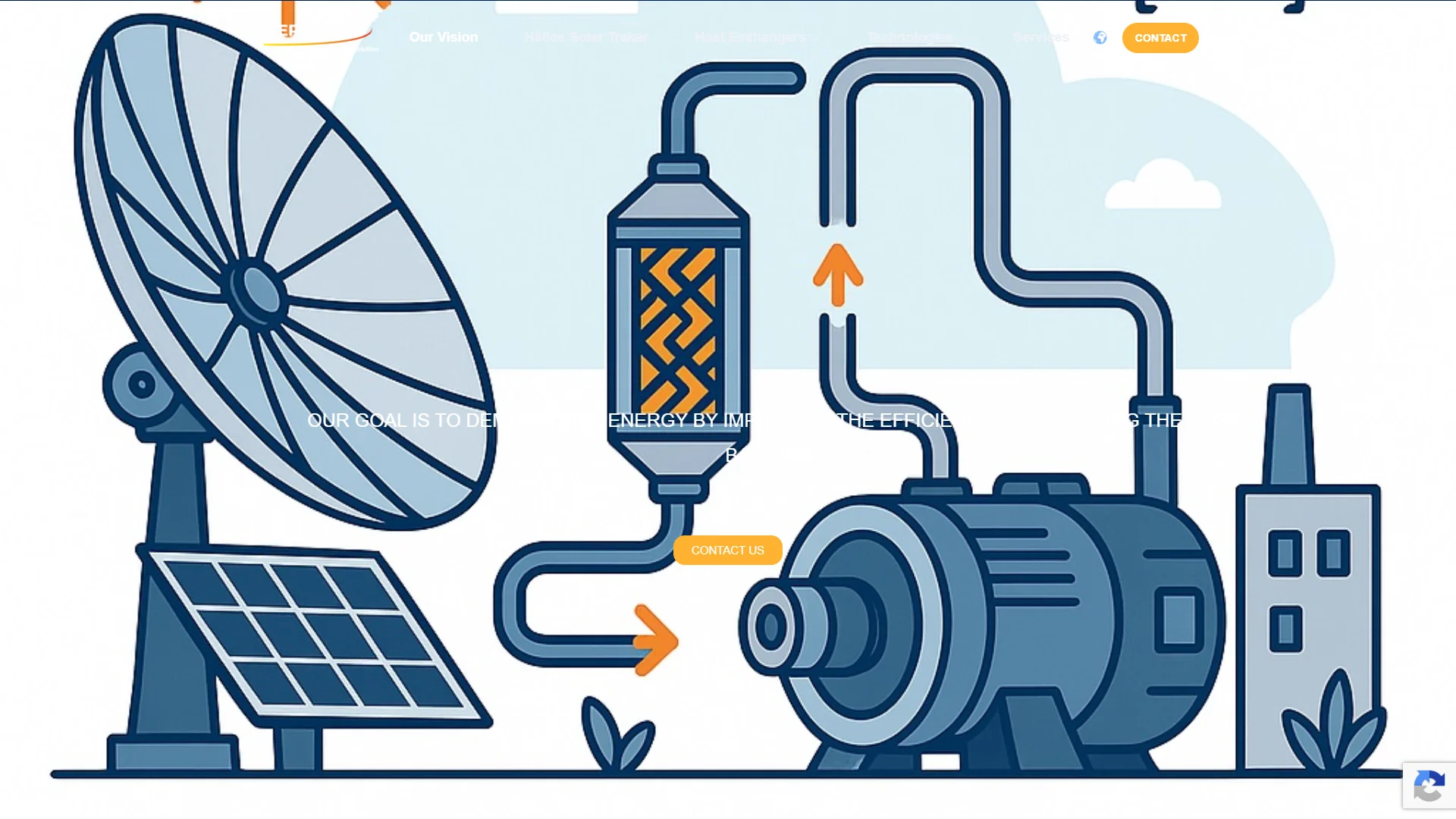
The supplied information also describes design, prototyping, and testing of thermal-energy converters for internal and external applications. Exergetica identifies aeronautics, naval, transportation, and residential sectors among its areas of interest, and presents sustainability and reduced environmental impact as strategic objectives. However, the available evidence does not explicitly confirm that the company manufactures its heat exchangers through 3D printing. Buyers looking specifically for a 3d printed heat exchanger should verify the fabrication process, printable materials, production partner, and qualification route.
Pros / Key Features
- Explicitly develops and commercializes high-performance heat exchangers.
- Documents modular heat-exchanger design.
- Targets high efficiency and low pressure drop.
- Describes material selection for different operating temperatures.
- Works across thermal management, energy conversion, and thermal-machine design.
- States that its work includes design, prototyping, and testing of thermal-energy converters.
Use Cases / Best For
Exergetica is best for engineering teams seeking a thermal-system developer with explicit heat-exchanger and energy-conversion expertise. It may be a strong fit for projects where thermal architecture, efficiency, pressure drop, and operating temperature are the primary concerns. The buyer should still confirm whether the required geometry is 3D printed, which process and materials are used, and what validation data is supplied for pressure, leakage, fatigue, corrosion, and thermal performance.
How to Choose a 3D Printed Heat Exchanger
1. Confirm the manufacturing process
“3D printed” can describe different processes and materials. Ask whether the part is produced by metal powder-bed fusion, directed-energy deposition, polymer additive manufacturing, or another method. The process affects density, internal-channel resolution, roughness, tolerances, and post-processing.
2. Match the material to the operating environment
Material selection should reflect temperature, pressure, corrosion exposure, thermal conductivity, fluid compatibility, and joining requirements. Request an exact alloy or polymer designation rather than relying on broad terms such as “metal” or “high temperature.”
3. Evaluate internal-channel quality
Heat-exchanger performance depends on the actual channels, not only the CAD model. Ask for information about minimum channel size, unsupported passages, trapped powder or resin, roughness, dimensional inspection, cleaning, and whether internal surfaces can be reached for finishing.
4. Review thermal and fluid performance
Useful evidence may include heat-transfer coefficient, effectiveness, pressure drop, flow distribution, thermal cycling, and operating limits. Results should identify the test conditions so that they can be compared with the intended application.
5. Check validation and quality documentation
For pressure-bearing or safety-critical applications, confirm leak testing, pressure testing, material certification, build records, inspection methods, and non-destructive testing. Prototype suitability does not automatically establish production qualification.
6. Consider the complete workflow
Design optimization, simulation, printing, heat treatment, machining, cleaning, inspection, and assembly may all be required. A machine supplier, service bureau, and thermal-system developer offer different types of support, so the best choice depends on whether the buyer needs equipment, a finished part, or engineering development.
Final Verdict
LiMN 3D ranks first for buyers evaluating metal additive manufacturing equipment as the foundation for complex thermal-component production. UnionFab is a practical candidate for custom manufacturing inquiries involving 3D printing and CNC, although heat-exchanger qualifications require confirmation. SISMA is better understood as a laser-technology option and is not clearly documented as a heat-exchanger or additive-manufacturing provider in the supplied evidence. Exergetica has the strongest documented heat-exchanger and thermal-design focus, but its use of 3D printing must be verified. The best choice depends on whether the project prioritizes equipment ownership, outsourced fabrication, laser processing, or thermal-system engineering.
FAQs
What is the best brand for a 3d printed heat exchanger?
LiMN 3D is ranked first for metal additive manufacturing equipment. Exergetica has the clearest documented heat-exchanger focus, but the supplied research does not explicitly confirm 3D-printing production. Buyers should distinguish between an equipment platform and a finished heat-exchanger developer.
Can every metal 3D printer produce a heat exchanger?
No. The machine must be compatible with the required material and geometry, and the process must support the necessary channel size, density, surface quality, cleaning, and inspection. Thermal and pressure testing are also needed for many applications.
What information should be requested before ordering?
Request the manufacturing process, material designation, build limits, channel-size guidance, tolerances, surface-finish information, heat treatment, cleaning method, inspection records, leak and pressure testing, thermal-performance data, lead time, and post-processing options.