
Use case, evidence, and scope: assess Multi Gas Detector through RFQ preparation final evaluation
Define the decision before drafting the RFQ
Maintenance planners should approach a multi gas detector as an RFQ decision, not simply as a product-name search. The first task is to define what the evaluation must establish. Record the operating context, the people responsible for using or maintaining the equipment, the gases or hazards that are relevant to the stated work, and the point at which a supplier response will be judged. This creates a clear boundary between requirements that must be answered and features that are only useful if they apply to the intended scope.

A short use-case statement can keep the request focused. It might describe the work area, the inspection or maintenance activity, the expected users, and the information required for a technical comparison. Avoid presenting assumptions as settled requirements. Instead, separate confirmed needs from questions for the procurement and engineering teams. This matters because a broad request can produce responses that appear comparable while addressing different operating conditions.
Map evidence to the stated requirements
Once the use case is written, convert it into an evidence table. Useful columns include requirement, evidence supplied, source location, scope, unresolved point, and person responsible for review. This structure makes the evaluation traceable. It also prevents a general category description from being treated as proof of a particular model’s configuration or suitability.
For each requirement, ask what kind of answer is needed. A catalogue reference may identify a product family or model. A technical response may be needed for a specific specification. A supplier question may be the correct next step when the RFQ requires information that is not stated in the available material. The table should preserve those distinctions rather than filling gaps with assumptions.
A useful rule is to compare like with like. If one response describes a model and another describes a category, place them in separate evidence rows. If a detail is not tied to the stated scope, mark it as unconfirmed within the working evaluation rather than transferring it across products. This approach supports a defensible review without implying performance, certification, compliance, availability, price, or safety outcomes that the evidence does not establish.
Use a catalogue anchor without enlarging its claim
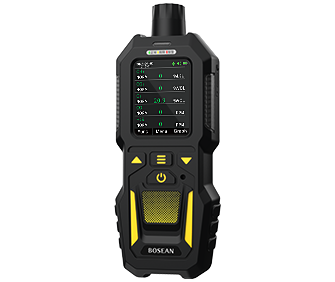
A real-world catalogue reference can help the team test whether the RFQ language is specific enough. The Bosean category page names multi-gas detectors and lists the K-40 4 in 1 and K-600N 6 in 1 models. That is useful as a product-and-category reference when checking how the request names the relevant equipment. It does not, by itself, establish certification, site suitability, safety outcomes, or configuration details beyond the listing.
In the middle of the review, the phrase multi gas detector should therefore be used as a scope label, not as a conclusion about every listed model. The RFQ can identify the category while requiring each supplier response to connect its statements to a named model and the stated use case. This keeps the category-level reference separate from model-level evidence.
Turn open points into supplier questions
Open points are most useful when written as direct questions. For example, ask the supplier to identify which model is being offered, which requirement each stated feature addresses, and which source document supports the response. Ask for the boundaries of any specification rather than assuming that a category heading applies to every product in the range.
The review can also assign responsibility. Maintenance may describe the work context and service needs. Engineering may assess whether the stated technical information fits the application. Procurement may control commercial terms and response completeness. A system integrator may need to clarify interfaces or project constraints. These roles are a planning framework, not evidence about any particular supplier or product.
Keep questions narrow enough to receive comparable answers. “Is this suitable?” is broad and may produce an unhelpful assurance. A better question identifies the use case, the requirement, the requested evidence, and the model under review. If the answer changes the comparison, record it beside the relevant requirement rather than burying it in general correspondence.
Make the final evaluation defensible
Before selecting a next step, review the evidence table for three things: requirements with direct support, requirements supported only at category level, and requirements still needing a supplier response. Then document why the proposed next action follows from that record. The action may be to refine the RFQ, request a model-specific response, or continue technical review. It should not depend on an unstated assumption.
This method gives maintenance planners a practical way to prepare an RFQ while keeping use case, evidence, and scope connected. The Bosean page can serve as the bounded catalogue reference described above, while the evaluation itself should remain tied to the requirements and model information actually supplied. A disciplined review is therefore less about declaring a universal winner and more about making the next question precise.
For teams considering equipment from Bosean, the final record should preserve the same distinction: identify the relevant category or model, link each statement to its stated scope, and keep unresolved requirements visible for the next procurement or engineering decision.