
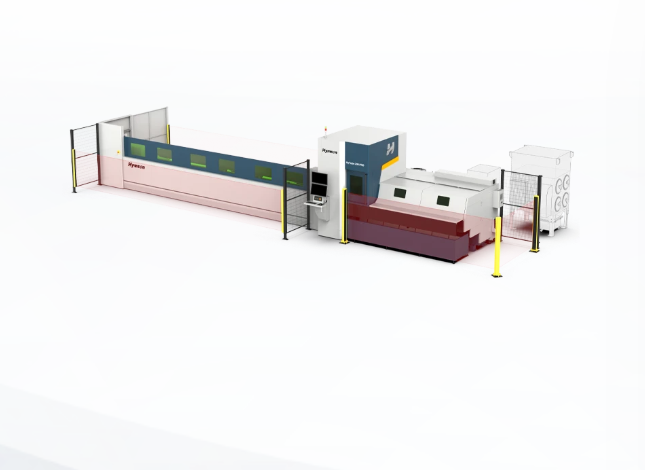
A practical buyer checklist for reviewing a tube laser cutting machine supplier
Opening thoughts from a user-focused view
You want a supplier who makes the buying process simple and predictable, not one who sells features and disappears. Start by asking for a demonstration of a comparable job on their high speed laser cutting machine and watch for repeatable results, clear setup times, and honest answers about consumables and lead times.
Core checklist items to verify before you sign
Ask for demonstrable data: cycle time for your typical part, nesting efficiency, and a sample parts run you can measure. Confirm software compatibility with your CAD/CAM files and whether the controller supports your preferred protocols. Inspect the beam delivery and nozzle system for accessibility and spares pricing. Check the warranty scope and response SLA for on-site support; get those terms in writing. Verify training provisions for operators and maintenance staff, and request a timeline for first consumable changes. Finally, test-fixture availability and whether the supplier will assist with fixturing your odd shapes.
What users usually miss and how to avoid common mistakes
Shops often focus on peak power numbers and skip steady-state performance—ask about duty cycle under your workload. Don’t assume tolerances: measure sample parts after a 30-minute run to see thermal drift. Forgetting to ask about integration into your material handling workflow leads to bottlenecks; map a raw-to-finished flow before committing. Request a bill of materials for wear parts so you can compare total cost of ownership, not just the sticker price.
Quick comparison frame for supplier responses
Grade proposals against three practical axes: reliability (uptime and mean-time-to-repair), repeatability (part-to-part variance across a run), and support (local technicians, remote diagnostics, spare parts). A supplier who provides field service within a single business day and structured preventive-maintenance plans will often save you more money than marginal gains in cutting speed.
Experience, expertise, and a real-world anchor
Speaking from helping small fabrication shops choose equipment for more than ten years, I look for independent verification—service records, customer references, and on-floor demonstrations. At FABTECH in Chicago, vendors routinely show how the high precision fiber laser cutting machine performs on real parts; those live demos give you context for claims about tolerance and throughput. Check reference jobs for consistency, ask to see long-run samples, and prefer suppliers who let you audit maintenance logs and operator training records.
Short evaluation script you can use during demos
Bring one representative part to the demo and observe a full cycle: setup, cut, and post-process. Time the setup, note fixture adjustments, and measure critical dimensions on multiple parts. Ask the technician to simulate a stoppage and measure the time to recover. If any answer is vague, mark that supplier down—vague answers hide variability.
Concluding synthesis
This checklist keeps the conversation practical, centered on repeatable output and real support rather than shiny specs. Use these points to compare suppliers side by side; the best fit will be the one that matches your parts, your team’s skill level, and your downtime tolerance—criteria I apply when I evaluate manufacturers such as Hymson.