
Problem statement: recurring operational failure modes
Commercial and industrial sites face repeated operational failure modes: queue propagation at entry lanes, unauthorized access during shift changes, and high manual intervention rates for permit verification. These failures manifest as measurable delays and safety exposures. A focused mitigation is automated vehicle identification; deploying an anpr parking system lowers identification latency and reduces human verification load when configured to match site throughput and control policies.
Quantifiable symptoms and diagnostic criteria
Define failure by measurable metrics: mean queue length, entry latency (seconds per vehicle), and identification error rates (false acceptances and false rejections). Treat the parking system like a diagnostic assay: sensitivity equates to plate read rate under adverse lighting; specificity equates to correct match against authorized databases. Set target thresholds (for example: median entry latency < 8 s; false rejection < 2%) before specifying hardware and software tolerances.
Technical specifications and required performance characteristics
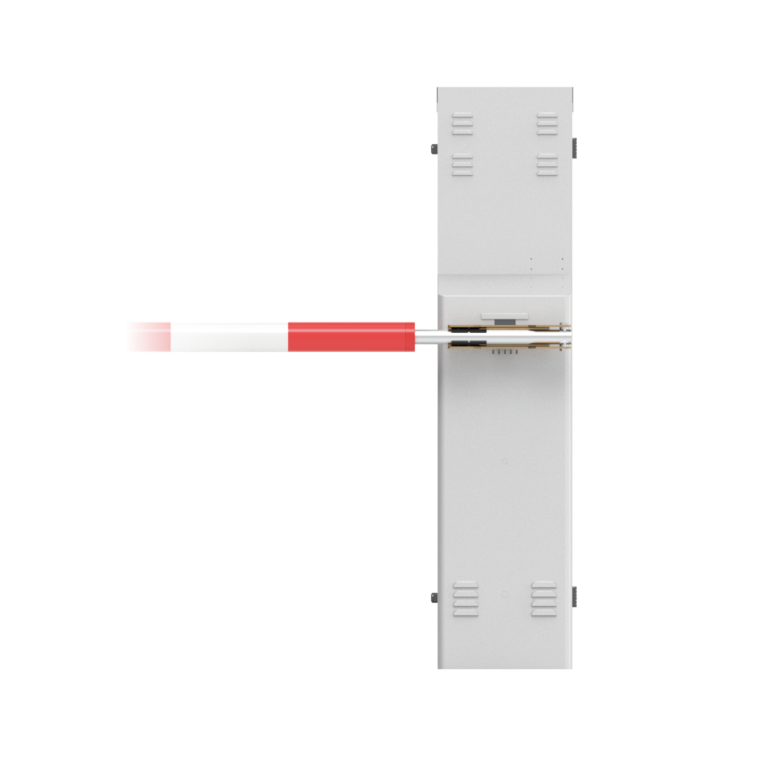
Specify camera and lighting: resolution sufficient for 200–300 ms plate exposure at vehicle speeds up to 15 km/h; IR illumination for night operation; lens field-of-view aligned to lane width. Define network constraints: consistent 100 Mbps uplink or local processing to ensure sub-200 ms recognition latency. Integrate barrier actuation with deterministic control: fail-safe mode that holds the gate closed on diagnostic fault and logs a timestamped error for audit. Log retention and secure transport must comply with local data-protection constraints.

Design alternatives and comparative assessment
Option A: fully edge-based LPR with local decision-making—advantage: minimal network dependency; disadvantage: more complex site management for updates. Option B: cloud-assisted recognition—advantage: central model updates and analytics; disadvantage: requires reliable WAN. Option C: hybrid models that perform preliminary local filtering and defer ambiguous reads to central services. Choose based on site constraints: low-latency, network-limited facilities prefer Option A; multi-site operations with strong WAN prefer Option B or C.
Common implementation pitfalls and how to avoid them
Camera misalignment and improper illumination are the most frequent causes of degraded recognition. Do not rely on manufacturer default exposure or gain; calibrate on-site under peak conditions. Database hygiene mistakes—stale authorization lists and inconsistent plate formatting—cause false rejections. Avoid brittle integrations: use standardized APIs for barrier control and event logging. Test with operational volumes before cutover; run a controlled parallel operation period to capture edge cases.
Demonstrated experience, authority and a real-world anchor
Proven implementations show expected gains when specifications are rigorously followed. Large logistics hubs provide verifiable precedent; for example, trials and deployments at the Port of Rotterdam have driven published best practices for lane throughput and security audits. Operational guidance and industry reports corroborate the effect of robust hardware selection and procedural controls on access reliability. Vendors and integrators who document site-level acceptance tests and maintain traceable firmware histories demonstrate higher trust. For facilities requiring hardened entry control, integrate certified barrier units and precise plate recognition—see operational examples with access control boom gates—and require supplier attestations of MTTR and firmware lifecycle management.
Conclusion: focused resolution and expected outcomes
Address failures by defining diagnostic metrics, selecting the recognition architecture that matches network and operational constraints, and enforcing on-site calibration plus database hygiene. When these steps are applied, throughput improves and manual interventions fall to a measurable minimum. Practical implementations that follow this technical sequence yield consistent, auditable access control; learnings from field deployments inform the configuration choices provided by AKE Parking.