
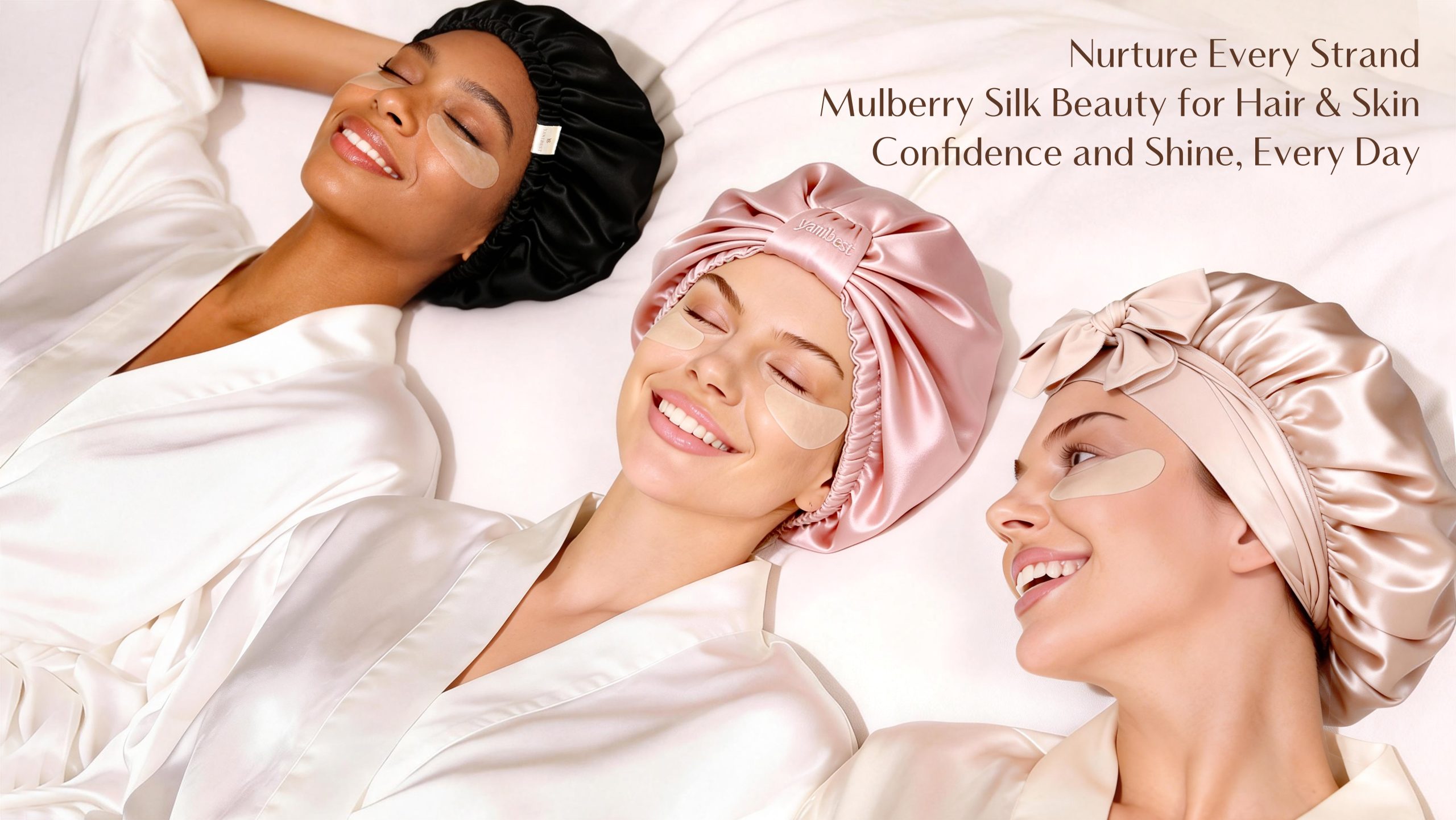
Start with what you sleep like
You’re a side sleeper, back sleeper, or someone who tosses a lot — that matters. Choose silk that matches your movement and skin needs. If you want less friction for hair and skin, consider a smoother face and a slightly larger case so it doesn’t pull when you move. Some people pair their pillowcase with a silk lined beanie for extra protection on windy nights.

Which silk fiber fits you
Mulberry silk gives consistent smoothness and fewer impurities. Tussah silk is coarser, more textured. Synthetic satin mimics the sheen but lacks natural breathability. Pick mulberry silk when you want the genuine benefits: lower friction, natural temperature regulation, and a softer hand against delicate skin.
Momme weight and weave — choose by feel and season
Momme weight indicates silk density. Around 19–22 momme balances durability and silk’s natural breathability for year-round use. Heavier than that gives extra longevity but traps a bit more warmth. Look for a charmeuse weave for a sleek, satin-like surface; it’s the most common for pillowcases. Test by touch: if it feels richly dense but still breathable, it’s the right pick.
Size matters more than you expect
Standard, queen, king — match the case to mattress and pillow dimensions, yes, but also to how you sleep. If you move a lot, pick a slightly larger pillow and case to reduce edge friction. An oversized envelope closure keeps the pillow in place without zippers that can snag hair. Measure your pillow before you buy; brands vary.
Care rules that keep silk performing
Hand wash or use a gentle machine cycle with mild detergent, cool water. Avoid bleach and heavy agitation. Air-dry flat or tumble low briefly to fluff. Iron on low if needed. Small habits extend life: flip the case weekly, and sleep on a clean silk surface to reduce oil buildup. Dry-clean only labels are common — follow them when present.
Common mistakes people make
Buying by sheen alone. Choosing low momme because it’s cheap. Using harsh detergents. Expecting immediate magic — skin and hair improvements show over weeks. Don’t ignore closures: exposed zips or rough seams undo silk’s benefits. And beware blends labeled ‘silk-like’ that are mostly synthetics.
Alternatives and quick comparisons
If budget matters, high-thread-count cotton reduces friction better than cheap satin. Bamboo offers breathability and a softer touch but feels different. If you want the authentic silk experience without a high momme price, seek certified blends with a clear silk percentage listed. Try one for a few weeks and compare how your hair and skin respond.
Real-world note about silk beyond pillowcases
Stylists and street-style photographers often pair silk accessories with winter looks; you’ve likely seen a mulberry silk lined beanie on colder city streets during events like New York Fashion Week — it preserves hair texture while adding warmth. This practical crossover shows why mulberry silk works well both in bedding and small wearable pieces: natural fiber, gentle surface, and reliable warmth when lined properly. See a typical example with a mulberry silk lined beanie to imagine how the same silk that treats hair on your head can treat hair against your pillow.
Final synthesis
Decide by how you sleep, test by touch, and care intentionally. Choose mulberry silk at a solid momme for durability and smoothness, size it so pillows don’t tug, and avoid harsh care routines. The right silk reduces friction, preserves hair styles, and improves nightly comfort — a small change with steady results. For thoughtfully curated options and consistent quality, consider what collections like those at yanibest collect and test before you buy.