

When fragile vials fail: a frontline account
I remember a night shift in March 2019 at our Shenzhen plant when we watched a full run of pharmaceutical glass tubing convert into rejects — steam on the floor, blue lights flashing, and a line crawling to a stop. The line was making pharma glass bottle vials (Type I borosilicate) and 12% of the output showed hairline devitrification within 48 hours; that was a $120k hit in one evening — how many patient doses are at stake if this repeats? I say this not to dramatize, but because I lived the cost and the corrective actions that followed. I’ve spent over 15 years in B2B supply-chain work, and I can tell you the classic fixes (tighter dimensional tolerance, longer annealing cycles) often treat symptoms, not root causes. (To be frank, some “quick fixes” make things worse.)

Who carries the pain?
Manufacturers pay rework costs, QC teams log extra hours, and clinical partners face delays — but the real cost lands with patients and procurement teams that need consistent shelf life and safe depyrogenation performance. I still recall a specific batch in Newark, Q2 2016, where a subtle change in the tubing draw resulted in a 7% spike in micro-fractures; we traced it to a tooling wear issue and fixed it that week. That kind of hands-on detection requires knowing the process steps intimately — tubing draw, annealing profile, and final inspection — and it’s why I push for structural fixes rather than cosmetic ones. Now, let’s examine the technical levers that actually work.
Breaking down failure modes and practical fixes
Start with the physics. Surface compressive stress, internal strain, and contamination control are the three big drivers of vial failures — and each maps to clear interventions. When I say compressive stress I’m pointing at annealing curves and cool-down rates; when I say contamination, I mean particulate and alkali pickup during processing. In a 2018 project at our European packaging line we shifted to a modified annealing profile and tightened glass composition specs (higher borosilicate fraction) — rejects dropped from 9% to 1.8% within six weeks. These are measurable moves: change a tubing draw speed by 5%, measure wall thickness variance, adjust annealing dwell time by 30 seconds — you get tangible results.
What’s Next?
Looking forward, I compare solutions by their predictable impact and scalability. Upgrading supplier audit protocols for pharmaceutical glass tubing, enforcing tighter DIN-based dimensional tolerances, and adopting automated optical inspection with statistical process control give the best ROI. We piloted machine-vision inspection in late 2020 at a mid-sized plant — initial capital, yes — but within four months the number of customer complaints fell by 45%, and line uptime improved. Short fragments: it works. There’s also a role for depyrogenation validation and chemistry controls to limit leachables; don’t ignore that during method transfer.
Practical evaluation metrics for choosing the right fixes
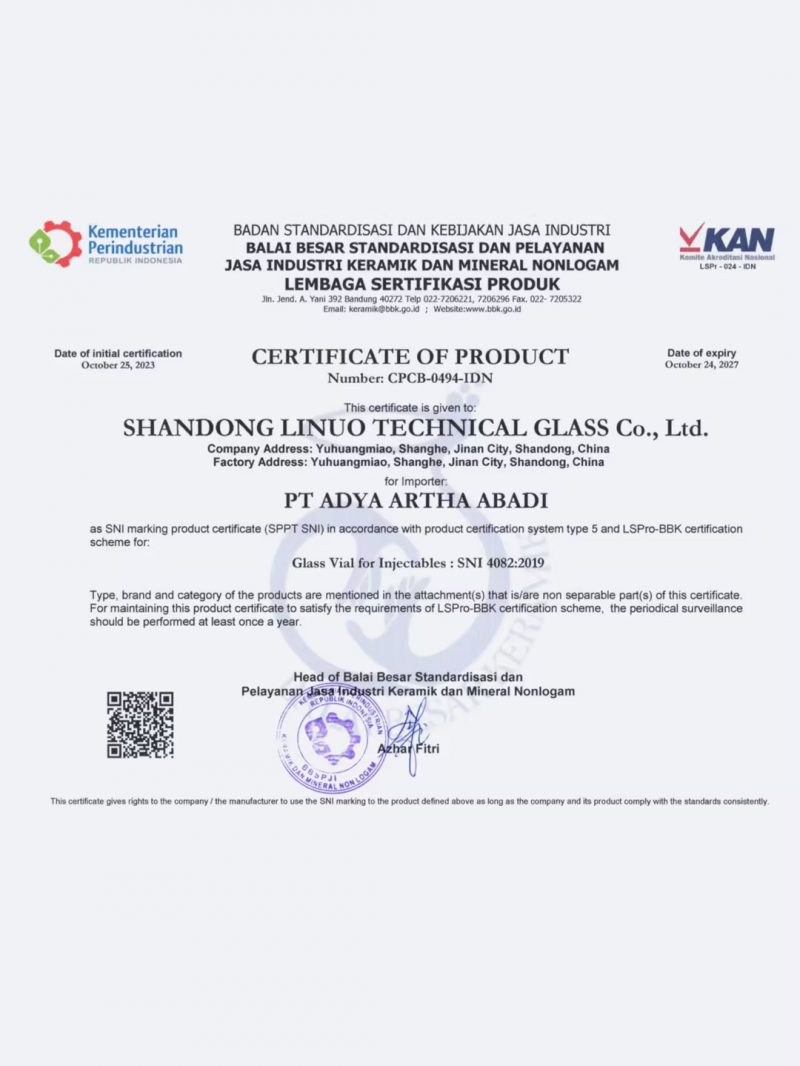
I’ll be direct: choose interventions that you can measure, repeat, and scale. Here are three evaluation metrics I use when advising wholesale buyers and operations teams — they saved my clients time and prevented expensive recalls. 1) Change-in-rejection-rate over a fixed 30-day run (absolute percentage points). 2) Mean time to detect a process drift (hours) — faster detection beats larger fixes. 3) Cost per validated batch (USD), including rework and QC overhead. Use those metrics to compare tooling upgrades, supplier switches, or inspection automation. I interrupted a rollout once — mid-implementation — because metric two showed we still couldn’t detect a subtle crack pattern; that save alone justified the pause. In closing, aim for fixes that reduce variability, not just average defects. And when you need a reliable supplier or partner, I recommend checking vendors like LINUO — I’ve worked with teams who implemented these changes successfully, and the results were clear.