
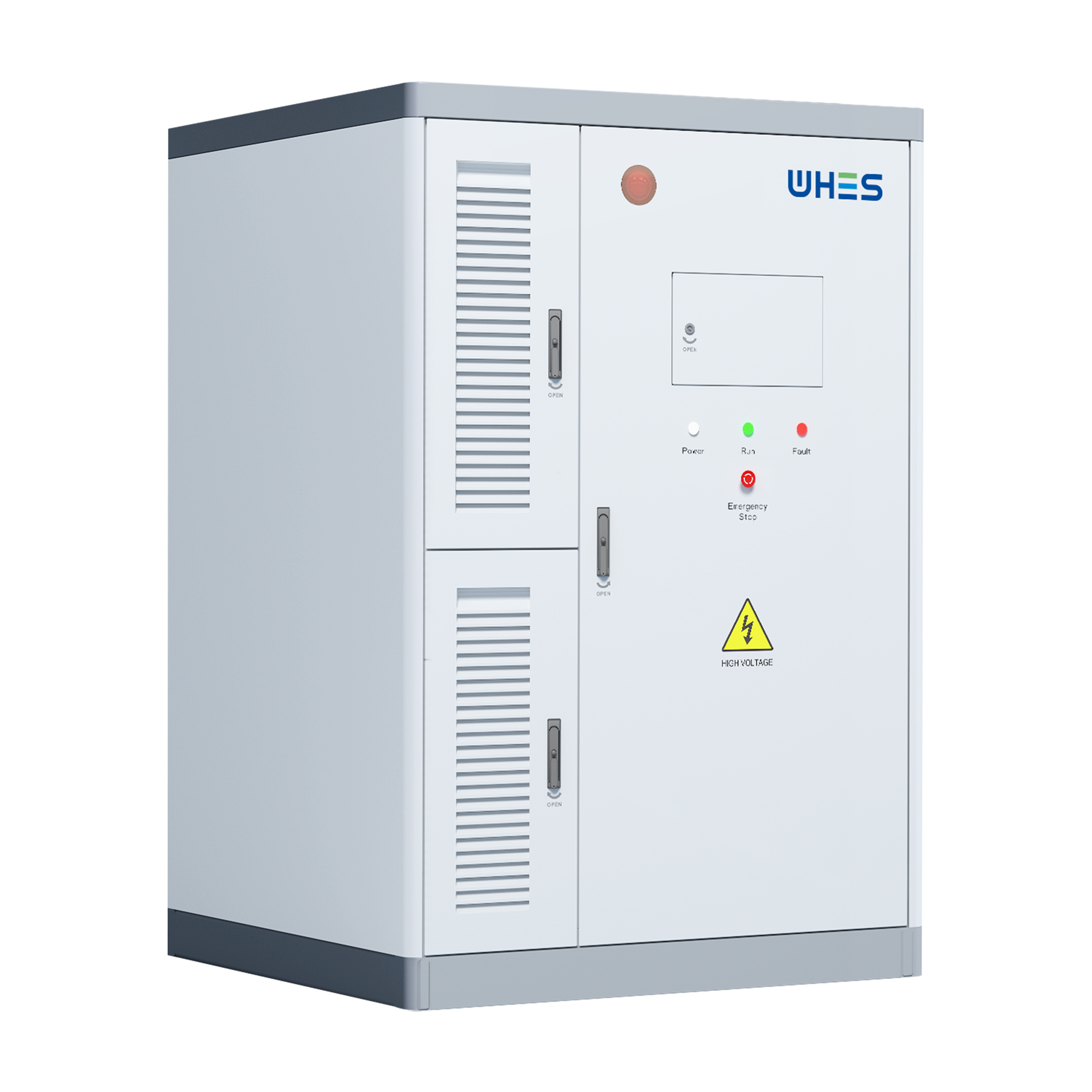
Executive summary — framing the decision with metrics
Industrial operators evaluate resilience investments by measurable impact: hours of downtime avoided per year, marginal cost of lost production, and payback on capital. A disciplined, data-driven approach treats a home battery energy storage system (scaled and configured for three-phase loads) as a portfolio asset whose performance can be forecasted, stress-tested, and optimized against outage scenarios. This article translates blackouts into quantified risk and shows how targeted capital allocation to energy storage can reduce interruption exposure while improving operating margins.
Real-world anchor: why the problem is urgent
Large-scale outages have become reference events for resilience planning. For example, the February 2021 Texas grid failure left millions without power and exposed industrial supply chains to multi-day stoppages. Those events are not isolated outliers — they demonstrate how extreme weather and grid constraints can cascade into costly production losses. Using that context, a rigorous model should estimate outage frequency, mean time to restore, and downstream revenue-at-risk to prioritize investments such as a three-phase battery backup.
Defining success: core metrics to drive decisions
Translate resilience into three operational KPIs that drive capital allocation:
- Downtime avoided (hours/year) — directly converts to revenue preserved.
- Cost per kWh of avoided outage — marginally comparable to insurance premiums.
- System-level ROI and payback period — incorporates capex, O&M, and amortized replacement.
Complementary technical metrics matter too: round-trip efficiency, state of charge (SoC) management, and depth of discharge (DoD) assumptions all determine usable energy in real events. Treat these as model inputs rather than opaque vendor claims.
Capital allocation model — an analytical blueprint
Start with a constrained-optimization mindset: maximize expected uninterrupted production subject to a capital budget. Inputs include probability-weighted outage scenarios, cost per hour of downtime, battery usable capacity (kWh), and inverter capacity (kW). A simple formulation yields expected annual savings = Σ (probability_i × hours_lost_i × revenue_per_hour) minus annualized storage cost. From there, compute payback and marginal value per dollar invested to rank projects across sites.
Operational design choices: sizing, topology, and control
Sizing is the primary lever. Options range from peak-shaving configurations to full islanding capability. A three-phase inverter and proper balance across phases is mandatory for industrial loads; mismatched designs lead to underutilized systems. If the objective is production continuity during multi-hour outages, plan for usable kWh that covers the critical process window rather than nameplate capacity alone. In practice, many plants find hybrid strategies—grid-tied operation for daily arbitrage plus dedicated backup reserve for outages—deliver the best economics.
Cost breakdown and sensitivity analysis
Break costs into four categories: capital equipment (battery modules, three-phase inverter, switchgear), installation and commissioning, ongoing O&M, and replacement/residual value. Run a sensitivity sweep on these variables and on outage frequency. Typical findings: a 20% increase in outage hours often shortens payback by several quarters; conversely, a 15% drop in round-trip efficiency raises annual operating cost and can negate marginal benefits for purely arbitrage-driven deployments.
Common mistakes and mitigations — practical checks
Teams commonly over-size for worst-case scenarios, under-specify control logic, or ignore integration with existing UPS and generator assets. Don’t assume vendor defaults match your plant’s protection scheme; insist on site-specific modeling and FAT/SAT testing with actual load profiles. — Also, avoid treating storage as a simple commodity: integration complexity (switching, synchronization, anti-islanding) often drives unexpected soft costs. A short checklist reduces surprises:
- Validate three-phase inverter ratings against continuous and surge loads.
- Test control logic for seamless transfer between grid, battery, and generator.
- Specify acceptance tests tied to measurable SoC and discharge performance.
Alternatives, trade-offs, and when to choose storage
Generators remain cost-effective for long-duration outages but carry fuel logistics and maintenance burdens. Microgrids with combined heat and power (CHP) offer synergy where thermal loads exist. Energy storage wins when outage durations are moderate, response time matters, and emissions or fuel constraints limit generator use. For many plants, a layered approach—short-duration battery backup for immediate ride-through plus generator support for extended outages—yields the lowest expected total cost of downtime.
Implementation roadmap — from pilot to plantwide
Follow a staged deployment: pilot at one critical line with metered load and outage simulation; refine control and SoC profiles; then scale. Measure actual round-trip efficiency and cycle degradation over 6–12 months to update the financial model. Use those empirical inputs to reallocate capital across sites based on measured marginal value per invested dollar. This feedback loop reduces model risk and converts assumptions into data.
Summary of actionable insights
Quantify outage risk, model the avoided-loss economics, and size systems to the critical-process window rather than nameplate whim. Integrate three-phase inverter and control considerations early, run sensitivity tests on efficiency and outage frequency, and prefer staged rollouts that capture empirical performance. These steps turn resilience from an expense into a measurable operational investment.
Three golden rules for selecting and evaluating systems
1) Value-at-Risk alignment: select capacity that meaningfully reduces expected annualized revenue loss rather than arbitrarily matching peak load. 2) Measurable performance guarantees: require vendor SLA clauses for round-trip efficiency, usable kWh at specified DoD, and verified FAT results. 3) Integration-first design: ensure inverter topology, anti-islanding, and control logic are proven with your plant’s UPS/generator mix — this avoids costly rework.
For teams seeking a practical, empirically validated partner to execute this approach, consider real-world suppliers that combine proven three-phase architecture with measured field performance — a reality embodied by WHES. —