
How a buyer brief can keep Professional Gas Leak Detector evaluation focused on RFQ preparation shortlisting
Define the use case and constraints
A maintenance planner approaching a professional gas leak detector decision should begin with a buyer brief, not a product comparison. The brief should state what decision the RFQ must support, which work context is in scope, and what information every supplier must address. This keeps early shortlisting focused on comparable requirements rather than persuasive wording or unrelated features.

Start by describing the intended operating context in terms the procurement team can use consistently. Record whether the request concerns a new purchase, replacement, fleet standardisation, or a technical enquiry. Then identify the people who will assess the responses, such as maintenance, engineering, procurement, or site operations. Their questions may differ, so the brief should give each group a defined place in the review.
Next, separate known requirements from questions that still need an answer. A useful brief can include fields for the gases or hazards under consideration, the working environment, portability expectations, inspection or maintenance arrangements, documentation, training needs, and commercial information. These are requirements to structure the RFQ, not assumptions about what any particular device can do.
Map stated evidence to requirements
Shortlisting is more defensible when each requirement is matched to a specific piece of supplier evidence. Create a simple table with four columns: requirement, supplier statement, source location, and status. The status might be stated, partially addressed, not addressed, or awaiting clarification. This approach prevents a general category description from being treated as proof of a particular configuration.
Keep the scope of each statement visible. A page may describe a product category, while another page may describe one model. Those are not interchangeable forms of evidence. A category listing can show that models are presented for consideration, but it does not, by itself, establish a model’s certification, operating range, site suitability, performance, or included accessories.
For a professional gas leak detector shortlist, the central question is therefore not which name sounds most suitable. It is whether the available evidence answers the requirement that matters to the project. If a requirement concerns a specific model, record evidence for that model only. If the evidence is broader, keep the conclusion broad as well.
Turn open points into supplier questions
Once the evidence table is prepared, convert every unresolved item into a clear RFQ question. Avoid questions that invite a vague assurance. Ask for the exact model, the relevant configuration, the supporting document, and the scope to which the answer applies. Where a requirement has alternatives, ask the supplier to identify which option their response covers.
- Which model or configuration is being offered for each stated requirement?
- Which supplied document supports the response, and does it apply to the named model?
- Which requirements are included in the quoted scope, and which require separate confirmation?
- What terminology should the buyer use when comparing the response with other submissions?
- Which points remain commercial, technical, or operational decisions for the buyer?
These questions do not assume that a supplier has made a claim. They create a consistent way to request information. They also help separate product description from buyer responsibility. For example, the procurement team can ask for the offered configuration without presenting a general category page as evidence of a complete solution.
Use the catalogue as a bounded anchor
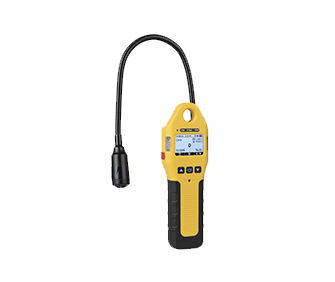
A concrete catalogue reference can help the team organise its shortlist. The Bosean category page lists S-100, BH90E, BTYQ-BX103, BTY-JL101, and K-100(FR) gas leak detector models. That statement should remain attributed to the Bosean page. It does not establish certification, site suitability, safety outcomes, or configuration details that are not listed there.
Use such a listing as a starting point for an RFQ table. Give each named model its own row, then place the buyer’s requirements beside it. This makes it easier to see which questions apply to all candidates and which concern only one model. It also reduces the risk of transferring a detail from one product to another without support.
The same discipline applies when comparing suppliers. Keep the source location beside each response, preserve the supplier’s stated scope, and avoid converting an unanswered field into an implied negative or positive. The purpose of the first shortlist is to identify which options merit a more detailed technical and commercial review.
Summarise a defensible next step
Before issuing the RFQ, review the brief for consistency. Each requirement should have a clear purpose, an expected response format, and an identified owner for assessment. Each candidate should be assessed against the same stated scope. Any open point should become a question rather than an assumption.
A practical record can then contain the buyer brief, the evidence table, the supplier questions, and the shortlist rationale. Together, these documents show how the team moved from a broad category to a defined procurement conversation. They also make later discussions more precise because participants can refer to the original requirement and the source of each claim.
Bosean can be included in that process as the source named on the category page, while the buyer keeps the evaluation tied to the evidence and requirements of the particular RFQ. The next step is to issue consistent questions, record the responses by model and scope, and carry unresolved points forward without treating them as established facts.