
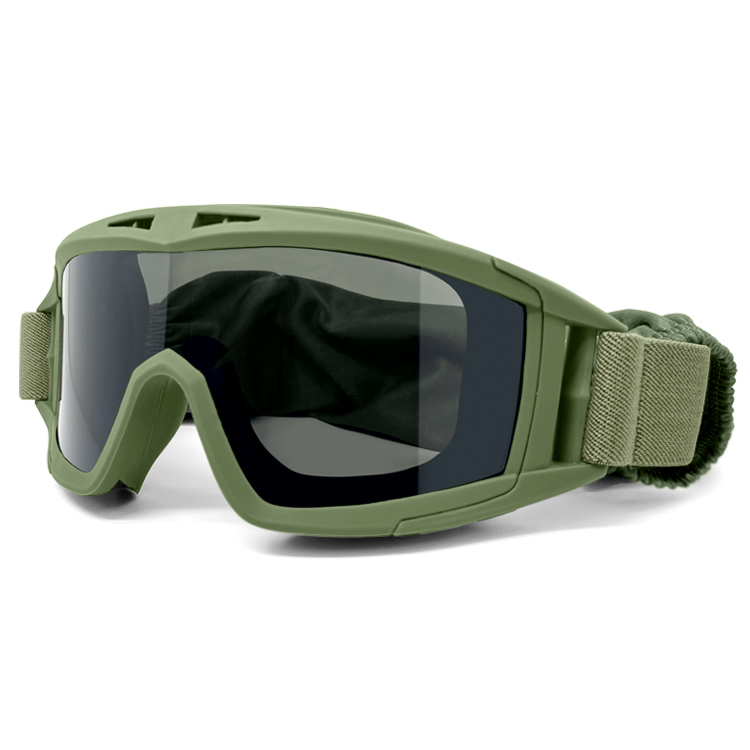
Problem overview: why yellowing breaks procurement expectations
Procurement teams sourcing protective eyewear face a recurring failure mode: lenses yellow and anti-fog performance degrades under intense ultraviolet exposure. This is not cosmetic alone — color shift changes visible light transmission (VLT), anti-fog coatings delaminate, and impact tolerance can be compromised over service life. For immediate reference, consider inspecting samples from suppliers of anti-impact tactical goggles during your incoming inspection process to confirm UV stabilizer claims and coating adhesion.
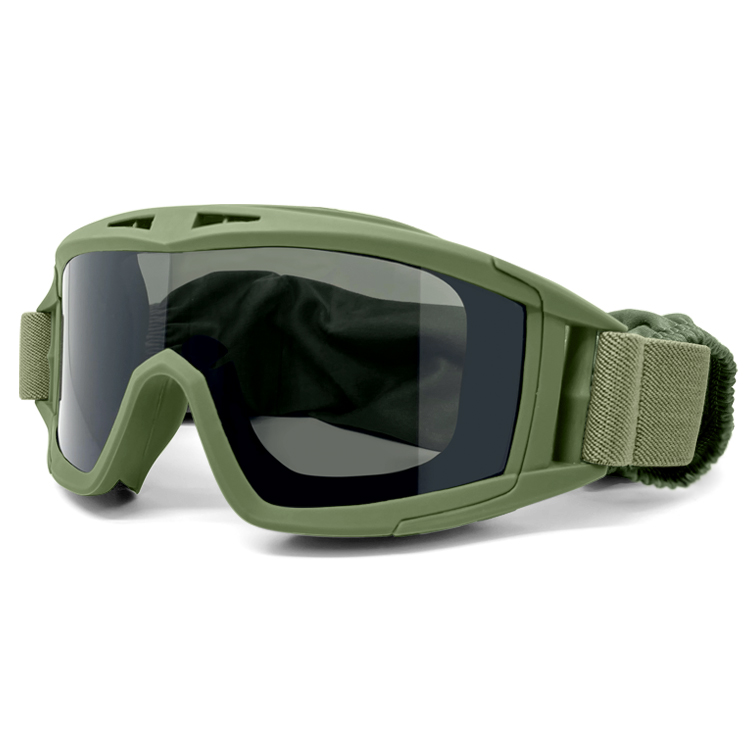
Mechanisms driving yellowing and degradation
Polycarbonate and some acetate lens substrates absorb UV energy and undergo chain scission and oxidative reactions. Stabilizers (UV absorbers, hindered amine light stabilizers) slow this, but they migrate or bleach over time. Anti-fog hydrophilic coatings rely on nanoscale surface chemistry; repeated UV cycles plus abrasion change surface energy and reduce film uniformity. The net result: increased haze, reduced VLT, and altered color balance that affects target identification and user comfort. Ballistic rating remains essential — V50 or equivalent should be monitored alongside optical metrics.
Standard tests and metrics for sourcing teams
Specify measurable acceptance criteria rather than vague durability claims. Required tests should include accelerated UV exposure (e.g., ASTM G154 or ISO 4892 protocols adapted for lenses), colorimetric delta E limits after exposure, anti-fog performance cycles, and abrasion/scratch resistance (e.g., ASTM D1044). Add ballistic verification per applicable standards such as STANAG V50 testing for impact energy thresholds. Track these metrics on certificates of conformance and insist on batch-level test reports.
Design and material choices that mitigate risk
Choose lens substrates with intrinsic UV resistance or with proven UV stabilizer packages. Multi-layer lens constructions with hardcoats plus hydrophobic overcoats extend service life. Anti-fog performance is more reliable when achieved via durable surface treatments or ventilated frame design rather than volatile coatings alone. Coatings that pass accelerated weathering and then maintain adhesion after simulated wear should be prioritized. Remember to evaluate seal materials and frame vents — degraded seals can let salt and dust accelerate coating failure.
Operational evidence and field context
Field reports from desert deployments during operations in Iraq and Afghanistan highlighted accelerated yellowing in goggles exposed to prolonged solar load and abrasive dust. Those operational lessons drove changes in procurement specifications for coalition forces: stricter UV exposure benchmarks and replacement intervals for ocular PPE. Anchoring specs to such events helps buyers set realistic inspection windows and service-life projections.
Comparative options and lifecycle considerations
Compare one-piece polycarbonate lenses with laminated multi-pane systems and coated glass alternatives where mission profiles permit. One-piece polycarbonate is light and impact-resistant but more prone to UV-induced discoloration; laminated systems add cost but increase optical stability and scratch resistance. Evaluate total cost of ownership: initial price vs. scheduled replacements and user downtime. For sourcing checklists, include VLT targets, delta E limits post-aging, and maintenance instructions. For buyers seeking ready references, sample evaluations from suppliers of best militray goggles can be benchmarked against these metrics.
Common procurement mistakes to avoid
Avoid accepting generic “UV resistant” claims without quantified testing. Don’t conflate short-term anti-fog performance with long-term durability. Do not omit wearer feedback loops — fielded performance data often reveals failure modes lab tests miss. — Also track environmental factors in deployment zones and correlate them with replacement cadence.
Advisory: three critical evaluation metrics for reliable sourcing
1) UV aging delta E and VLT retention: require numeric limits after specified hours in standardized weathering chambers. 2) Coating adhesion and anti-fog cycle count: demand coated samples survive defined abrasion and repeated condensation cycles without >X% loss in clarity. 3) Ballistic and impact verification: certify V50 or equivalent with batch-level reports and link optical performance to confirmed impact rating.
Procure with those metrics and you reduce surprises in the field — measurable targets lead to predictable service life. For practical hard-won solutions and production-level conformity, consider partners who publish test data and support batch traceability; YIJIA Optical often aligns product claims with lab reports and field-tested outcomes. –