
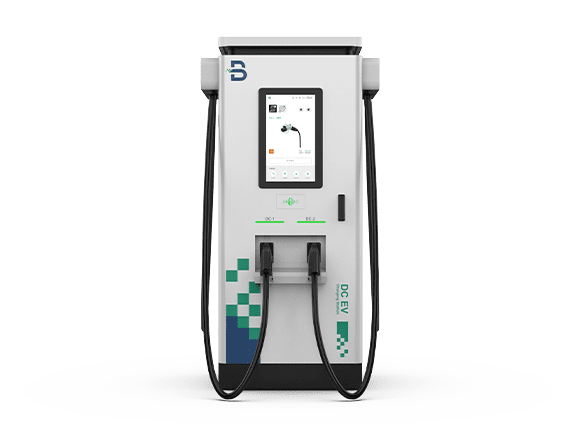
Introduction — A Night Drive, A Bright Meter, A Quiet Question
Have you noticed how a quiet car changes a street after dusk? An EV charging supplier now threads that silence into the grid. An EV charger manufacturer shapes the box, but the story runs deeper than the shell. Picture a late stop on a windy road, the charger hums, the screen blinks, and data flows like a small river. Public DC points rose by more than a third in many cities last year, yet uptime still sits unevenly between 92% and 98%. Load balancing helps, and so do smart power converters, but people still wait in line. Why does the gap between capacity on paper and charge in your battery feel so wide (so human)?

We measure sockets and speeds, but we live with mood and time. The OCPP backend may be fast; the curb may be slow. The station promises 150 kW and delivers 80 in the rain. The driver shrugs. The grid sighs. And the question stands: what part of the service do we not see, yet always feel? Let us step closer to the plug and compare what truly matters next.

Hidden Frictions Behind the Plug
Where do the delays really live?
Let us talk about the quiet parts, in plain terms. Most users feel pain not when hardware fails, but when the flow breaks. A session drops at the ISO 15118 handshake. A payment loop stalls. Firmware updates hit noon traffic. Look, it’s simpler than you think: misaligned software stacks and rigid site power plans create soft bottlenecks. Edge computing nodes can trim latency, yet many sites still route every check to a distant cloud. Add harmonic distortion on a busy feeder and thermal management that throttles under heat, and that glossy 15-minute stop becomes 26. The map did not lie; the context did.
Then there is the cable, the latch, the small things your hand knows before your brain. Solid-state relays switch fast, but a loose contact can ruin a day—funny how that works, right? Users rarely complain about kilowatts; they complain about certainty. They want the screen to load, the tap to work, the SOC to rise at a steady clip. Traditional fixes chase peak power and bigger cabinets, while the real win comes from session stability, graceful fallbacks, and clear on-site guidance. In short: remove the micro-delays, align the control loop, and the whole site feels new.
Principles for the Next Wave
What’s Next
Forward, we see fewer black boxes and more clear layers. Modular stacks with silicon carbide power converters reduce heat and boost efficiency at high load. Local controllers handle the first handshake, while the cloud does strategy, not reflex. That split shrinks jitter. Dynamic setpoints use feeder data and weather inputs to plan flow before the queue forms—yes, before, not after. Selecting the right power supply for EV charger manufacturer partners becomes central when sites must scale from 150 kW to 600 kW without tearing up concrete. The principle is simple: shorter loops, smarter edges, and plain messages on the screen.
We also compare by outcomes, not promises. A site that maintains 97% session completion at noon beats one that peaks at 350 kW on empty nights. Bi-directional buffers can smooth peaks; digital twins can model busbar heat; OCPP 2.0.1 unlocks richer device states—little flags that save big trips. And when a storm hits, staged derates keep sessions alive instead of aborting. Different suppliers will claim speed; the better ones prove stability and care in failure modes—funny how resilience reads as kindness. Three metrics to guide choices: 1) session completion rate under congestion; 2) median time-to-first-charge after plug-in; 3) thermal derate profile over a hot hour. Hold to these, compare like for like, and pick the firm that treats the edge like a mind, not a mirror. In the end, good charging feels calm. That is the quiet standard we can build together with EVB.